
I attended Advanced WAC (Writing Across the Curriculum) last Tuesday. I’ve been attending every year since 2017, and I always come away with at least one new idea to incorporate into my teaching. This year, the activities and discussions were around the theme of critical thinking. What is it? How do we define it? How would we map it? We revisited Bean & Melzer’s chapter 2, “How is Writing Related to Critical Thinking” from Engaging Ideas.
The first activity was to free-write about an assignment that students like and that you enjoy teaching. My assignment is the “Who Am I” crot essay, which asks students to pick ten childhood learning experiences that helped make them who they are today (see my previous posts that explain the assignment in 3 parts). I shared my assignment with Nicole, a nutrition instructor. Her assignment has students picking a favorite food and researching its history and ingredients. This was a fun discussion because, as a writing consultant, I had read a few of her students’ essays. Students really do enjoy her assignment.
We next had to write about whether we felt critical thinking was subject-specific or transferable across disciplines. I believe it is transferable. My reasoning was that by just having this conversation, we are engaging in critical thinking. Teaching first-year writing, I realized how important it is to be as transparent as possible to help students understand when they are doing critical thinking. This is one of those “OMG” (One Meaningful Gift) moments that I will try to incorporate into my curriculum.
Next, each group was assigned pages from chapter 2, “How is Writing Related to Critical Thinking,” and my group was assigned the pages on “Avoiding a Thesis: Three Cognitively Immature Essay Structures.” The first is “And Then “Writing, or Chronological Structure.” The second is “All About” Writing or Encyclopedic Order. The third is “Data Dump Writing, or Random Organization. During our group discussion, we agreed the best quote to share was “. . . students come to college imagining knowledge as acquisition of correct knowledge rather than the ability, say, to argue a position or connect to a conversation” (Bean & Melzer 27).
Next we discussed the eight foundational assumptions about writing: Writing is a process, Everyone can write, Becoming a writer takes time, Focusing on students’ strengths builds confidence, Writing is complex, Students benefit from instruction, practice, & feedback, Writers consider expectations, strategies, flexible decisions, and Writers cultivate Habits of Mind.
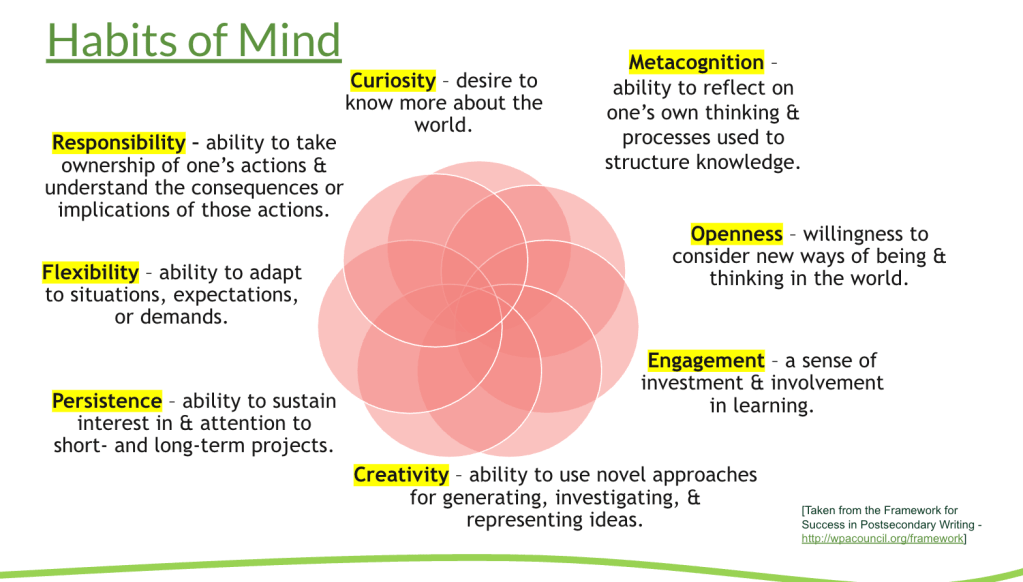
We were asked to write about which of the habits of mind we believe are essential. I picked Curiosity, Engagement, and Persistence, especially for first-years.
After this discussion, we were then asked to create a Critical Thinking Map with a partner. Rachel & I created this image that included a speech balloon as we talked about our critical thinking process. Then, while eating lunch, I created a Google drawing of my critical thinking process, which I may use in my teaching. See below images
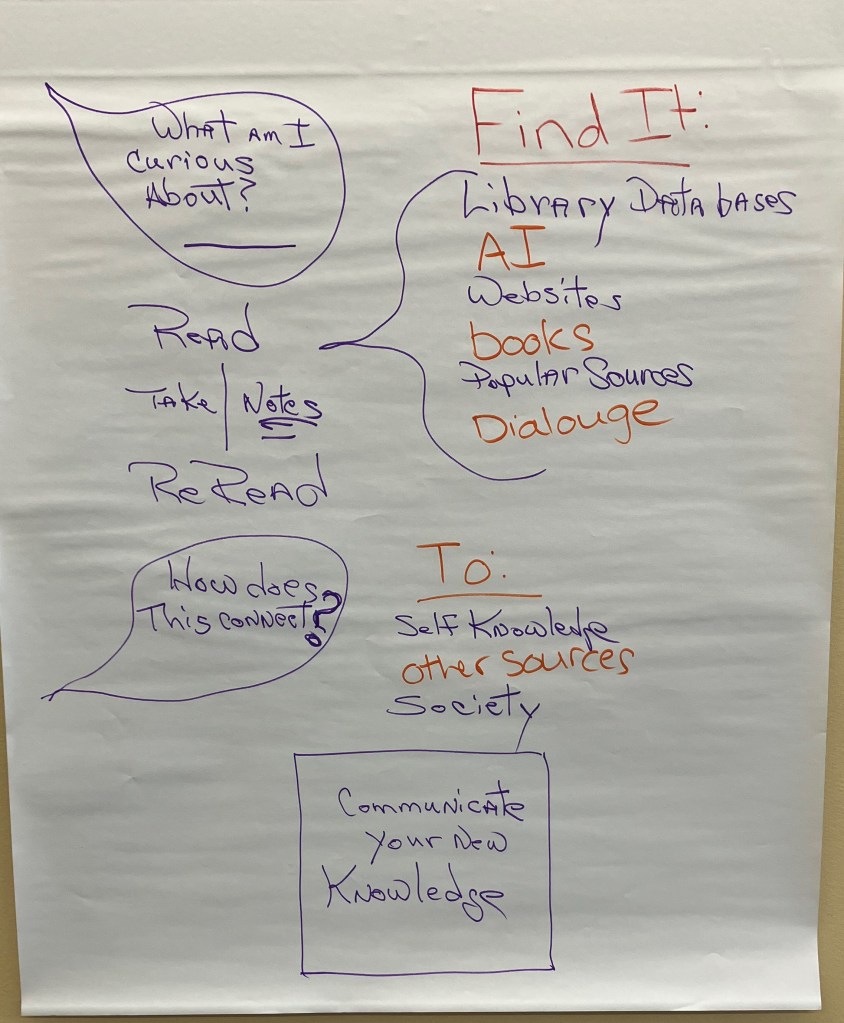
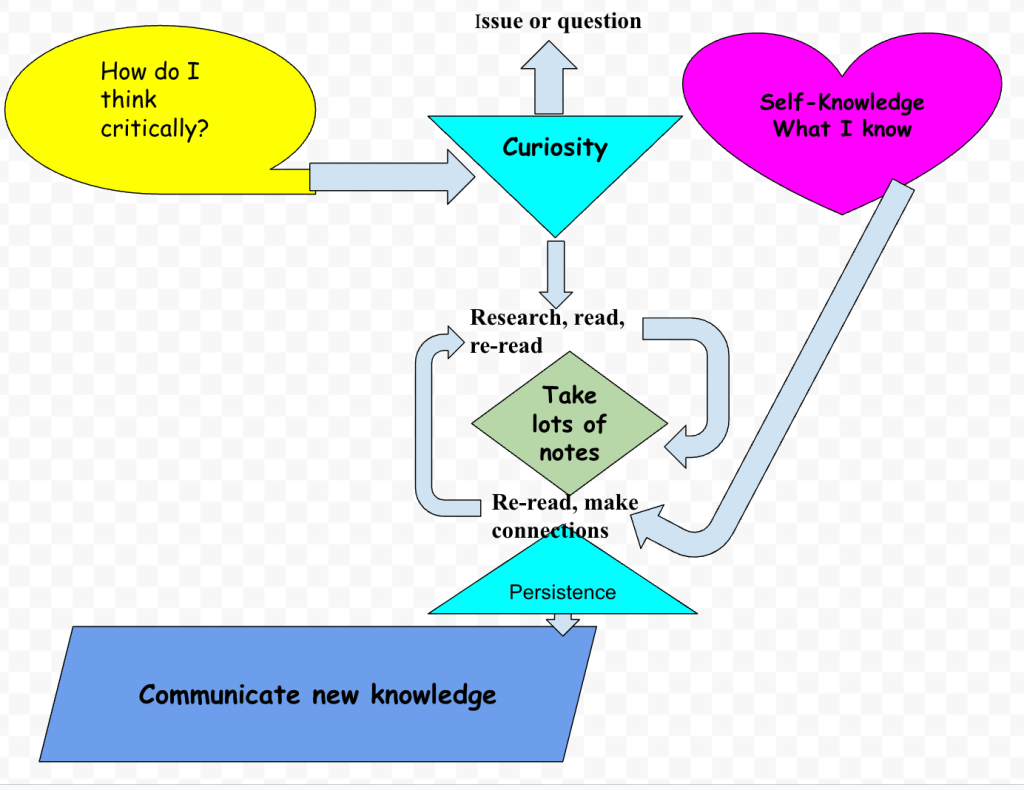
After screaming at WordPress for 30 minutes on how to place my images side by side, I’m still not sure HOW I did it. Clicking, deleting, uploading, deleting again and again, I finally have them side by side. Was this a critical thinking moment? Maybe . . .
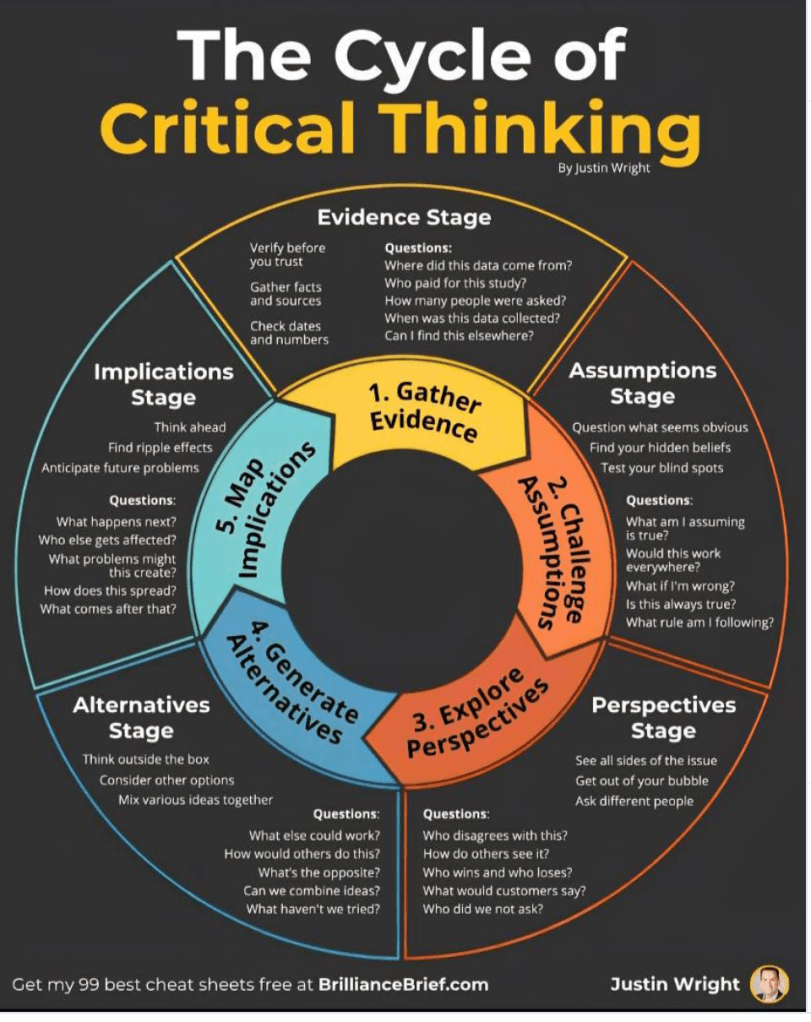
After writing my blog post yesterday, this popped up on Instagram, and I thought I would share it here. A more detailed process after you have a thing, an issue, or a problem you are curious about. Getting first-years to pick or choose that thing/issue/probelm they are curious about is the hardest part. That’s the initial critical thinking part I help them with, then we are off to the races, finding research, reading articles, and getting students to make connections between the articles and their own knowledge and/or biases. Getting them to persist is a struggle for some students, one of the habits of mind.
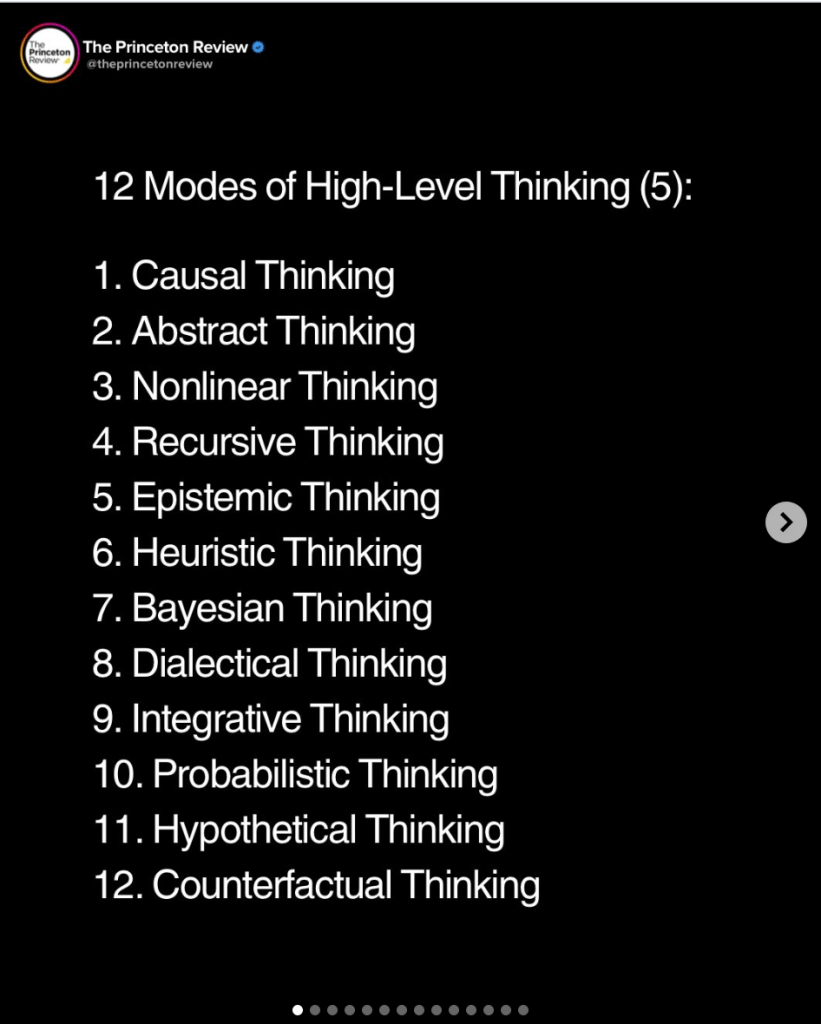
Again on Instagram, this popped up. This is a LOT of thinking and way beyond my students. But I thought it was fun to consider.
Yay, my fourth post is done for now!
Revised June 9! Writing is a process, as this post illustrates. And critical thinking can be taught in several ways, depending on the audience.

 Cunniforms to Blinking Cursors