Boomers & Doctors

In the last five months I have now had appointments with FIVE different Doctors! Three of the appointments were for annual check-ups, the other two were with specialists. Where do I begin? Being born in 1946, the beginning of the baby boom after WWII, I have seen a lot of changes, advancements, and discoveries in medicine.

I suppose I should begin with when I was three and a half and had polio. I remember my mother putting me in hot baths. I remember trying to walk with two doctors holding my hands in the hospital. I remember being very upset because I was a big girl and they put me in a baby bed. Luckily, I had a mild case because I was only sich for a month or so and I can walk today. Then when I was ten, I was told I was allergeric to everything green. I had a rash all of my body, needed to use calamine lotion and wear long sleeve shirts and long pants the summer of 1956. Both of these experiences left a lasting impression on me.

The next thing that left a lasting impression, was growing up with a grandmother who had type 2 diabetes. I remember giving my Grandmother, Nannie, orange jiuce with sugar or a candy bar because she was feeling faint. My mother had several diseases. She had her thyroid out at 12 or 13 and again when she was thirty-five, after having my youngest sister. She was later diagonosed with Addison’s disease when I was fifiteen. She was in the hospital for a couple weeks. I would walk to the hospital on my lunch hour to visit. Yes, being the oldest of four, I did the cooking and had to get my youngest sister on the school bus every morning. That’s a whole other story. My mother later would be diagnoised with lupus and diabetes. She also became a brittle diabetic, where her sugar could drop or rise causing her to possibly lose conscisnous. So, I also gave her orange juice or candy or made her eat something.

Growing up with diabetes in my family I was drawn to reading about it, so when Dr. Atkin’s New diet Revolution book came out in 1992, I got a copy and read it from cover to cover. Over the years I have recommended it and given several copies away. I became more aware of my own diet and gave up most complex or refined carbohydrates, such as suger, white flour. Yes, I gave up white bread. I am hypoglycemic, so if I don’t eat, I may trigger a migraine. Anyway, I was determined not to become a diabetic. Learning about my own body and knowing what it can and can not take is important to me.

Ok, so when I saw my general practioner in January, I finally remembered to ask her about the rash I had on my head just inside my bangs. It had been there for maybe two years, but because it was hidden under my bangs I would forget about it. However, this time I wrote it down becasue I also wanted a wort removed from my neckline. When my doctor saw them, she sent me to a dermitologist. I got an appointment in February. When the dermitologist first saw the spot she said it was probably skin cancer, so she took a biopsy. She also froze the wort right there in the office. It fell off a week later. A few days after the appointment I got the results and yes it was basil cell skin cancer. So then, I was sent to see another dermotoligist who specialized in the Mohs procedure. I had an appointment with him in February. He explained the procedure, where they scrape the skin, test it and keep scraping until there are no cancer cells. However, this wouldn’t be done until May 13!
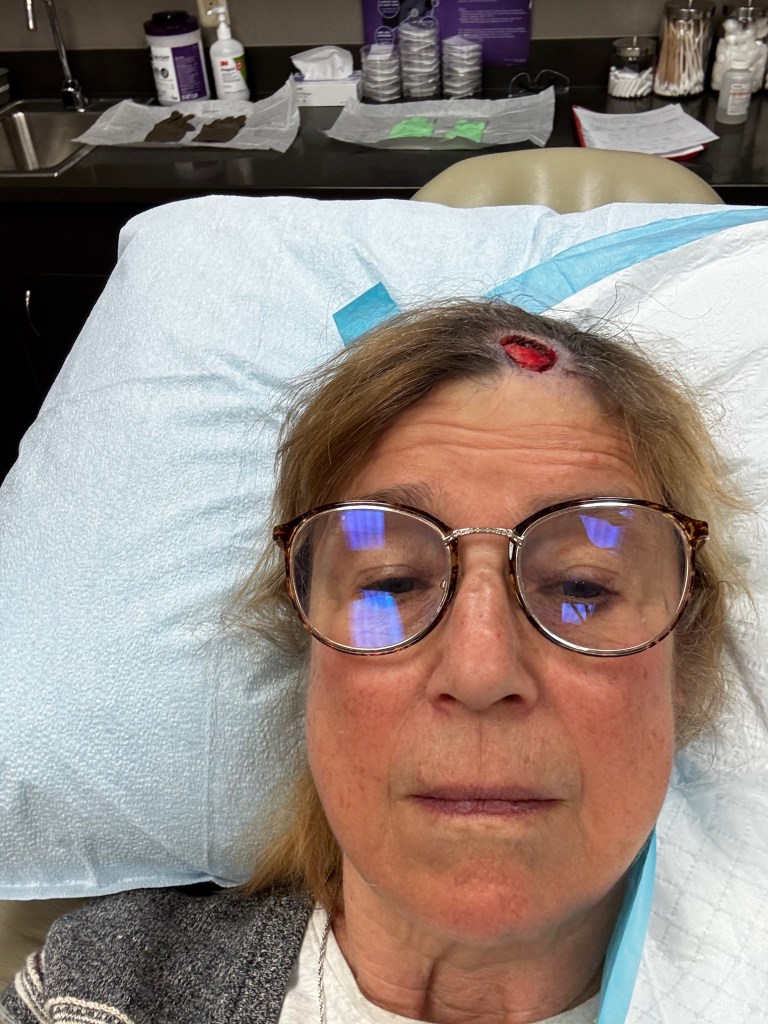
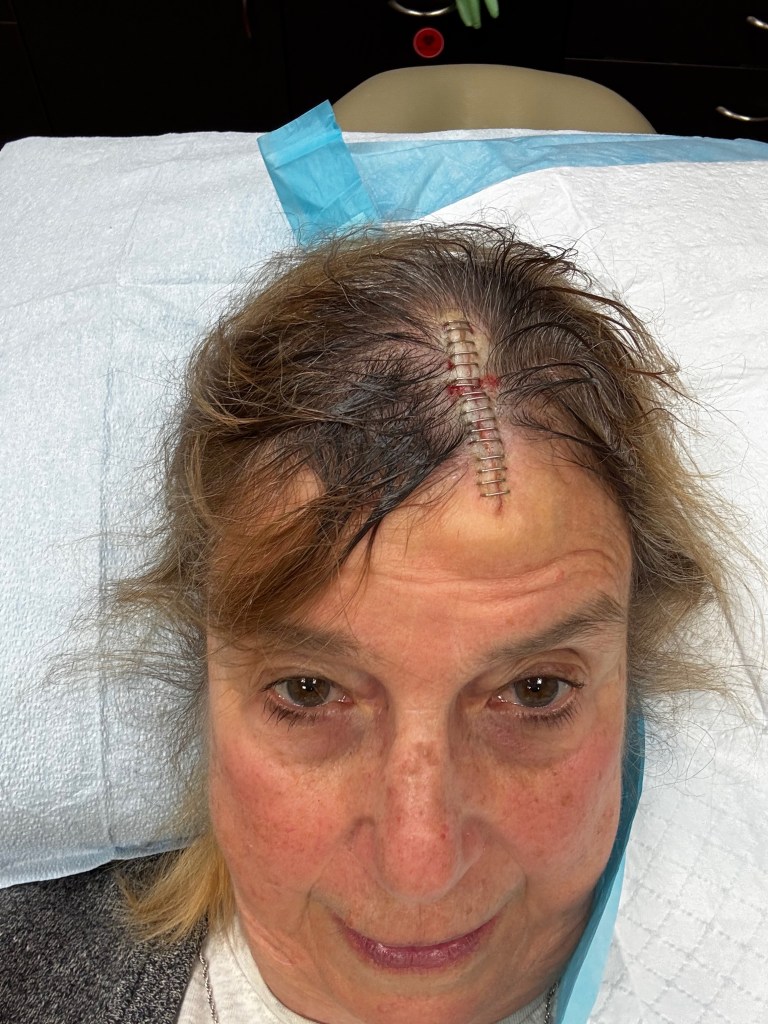
May 13, after the second scraping for the Mohs procedure was finished and the results came back negative, I took this pic.

Then the Doc stitched me up with desolvable stitches and stapled it with 17 staples! “Holy Shit ” I said taking this pic, just as the nurse was walking back into the room to bandage my head. She laughed. It was shocking, how a half inch spot can turn into a 2-1/2″ incision.

On my way home, I was reminded of an article I had recently read about Warren Buffet. When bad things happen just think about three good things. So I thought, “Good Thing” I have a whole collection of scarves and hats. “Good Thing” I have good insurance. “Good Thing” my hair will grow back. I am very grateful, this type of cancer has a 90% cure rate.

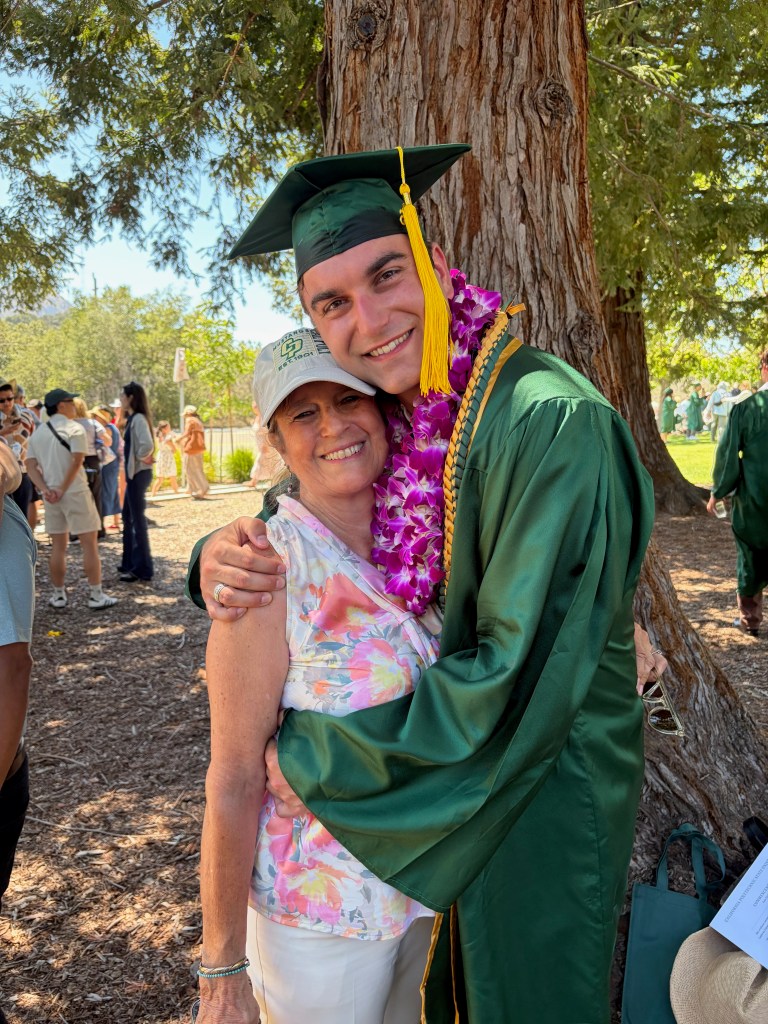
Yes! I got a Cal Poly hat for my grandson’s graduation, and yes, I wear scarves that cover the small bandage to cover the last hole while it heals. I see the Mohs Doctor July 7th, hopefully it will be all healed by then.

Being a Boomer and seeing my doctors is just a fact of life. Until next Blog, don’t wait to see your doctor! Whatever it is you are curious or worried about WRITE IT DOWN!

Posted in Uncategorized | Tagged , , , , , , | Leave a comment

Learning How to Teach Critical Thinking

I attended Advanced WAC (Writing Across the Curriculum) last Tuesday. I’ve been attending every year since 2017, and I always come away with at least one new idea to incorporate into my teaching. This year, the activities and discussions were around the theme of critical thinking. What is it? How do we define it? How would we map it? We revisited Bean & Melzer’s chapter 2, “How is Writing Related to Critical Thinking” from Engaging Ideas.

The first activity was to free-write about an assignment that students like and that you enjoy teaching. My assignment is the “Who Am I” crot essay, which asks students to pick ten childhood learning experiences that helped make them who they are today (see my previous posts that explain the assignment in 3 parts). I shared my assignment with Nicole, a nutrition instructor. Her assignment has students picking a favorite food and researching its history and ingredients. This was a fun discussion because, as a writing consultant, I had read a few of her students’ essays. Students really do enjoy her assignment.

We next had to write about whether we felt critical thinking was subject-specific or transferable across disciplines. I believe it is transferable. My reasoning was that by just having this conversation, we are engaging in critical thinking. Teaching first-year writing, I realized how important it is to be as transparent as possible to help students understand when they are doing critical thinking. This is one of those “OMG” (One Meaningful Gift) moments that I will try to incorporate into my curriculum.

Next, each group was assigned pages from chapter 2, “How is Writing Related to Critical Thinking,” and my group was assigned the pages on “Avoiding a Thesis: Three Cognitively Immature Essay Structures.” The first is “And Then “Writing, or Chronological Structure.” The second is “All About” Writing or Encyclopedic Order. The third is “Data Dump Writing, or Random Organization. During our group discussion, we agreed the best quote to share was “. . . students come to college imagining knowledge as acquisition of correct knowledge rather than the ability, say, to argue a position or connect to a conversation” (Bean & Melzer 27).

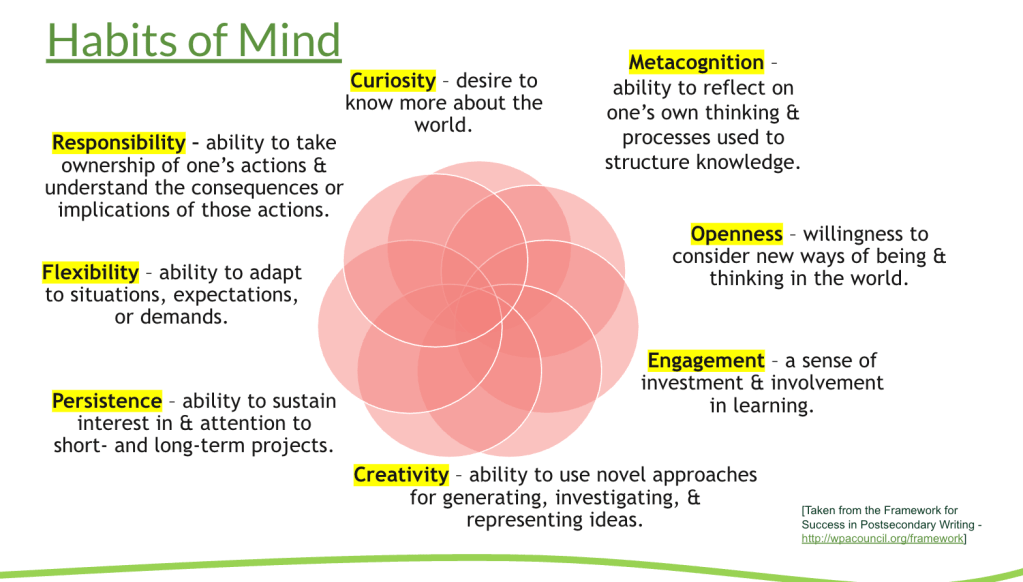
Next we discussed the eight foundational assumptions about writing: Writing is a process, Everyone can write, Becoming a writer takes time, Focusing on students’ strengths builds confidence, Writing is complex, Students benefit from instruction, practice, & feedback, Writers consider expectations, strategies, flexible decisions, and Writers cultivate Habits of Mind.

We were asked to write about which of the habits of mind we believe are essential. I picked Curiosity, Engagement, and Persistence, especially for first-years.

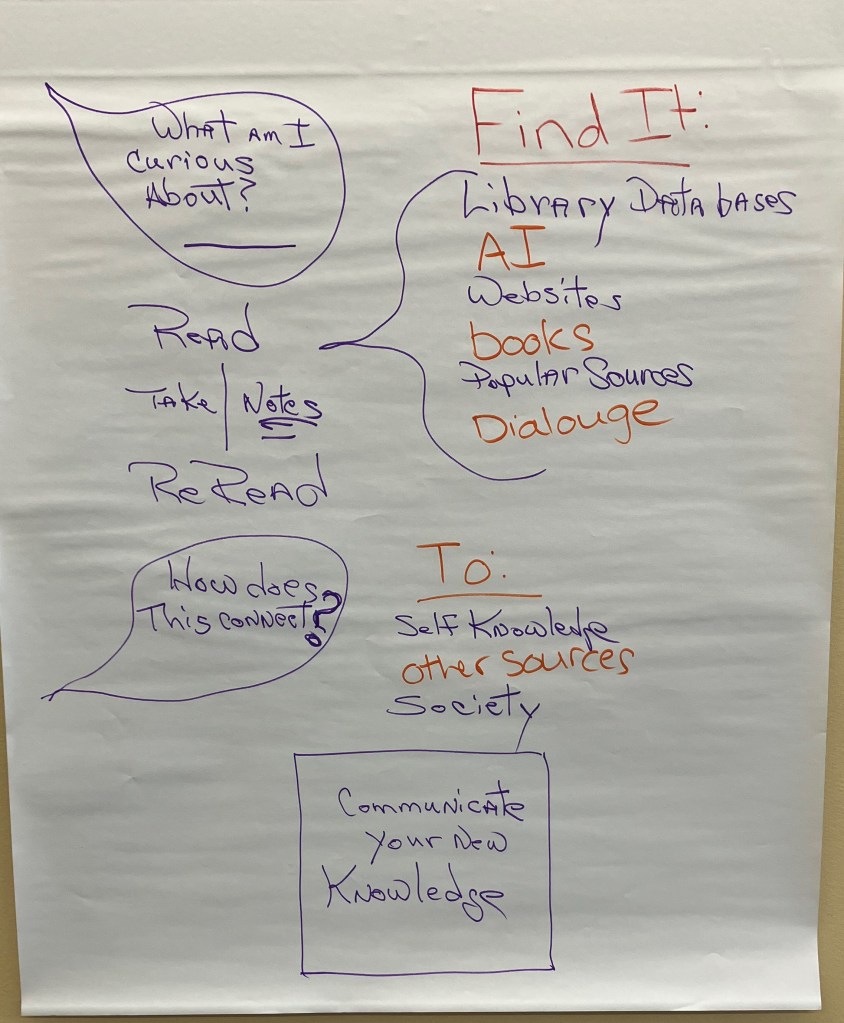
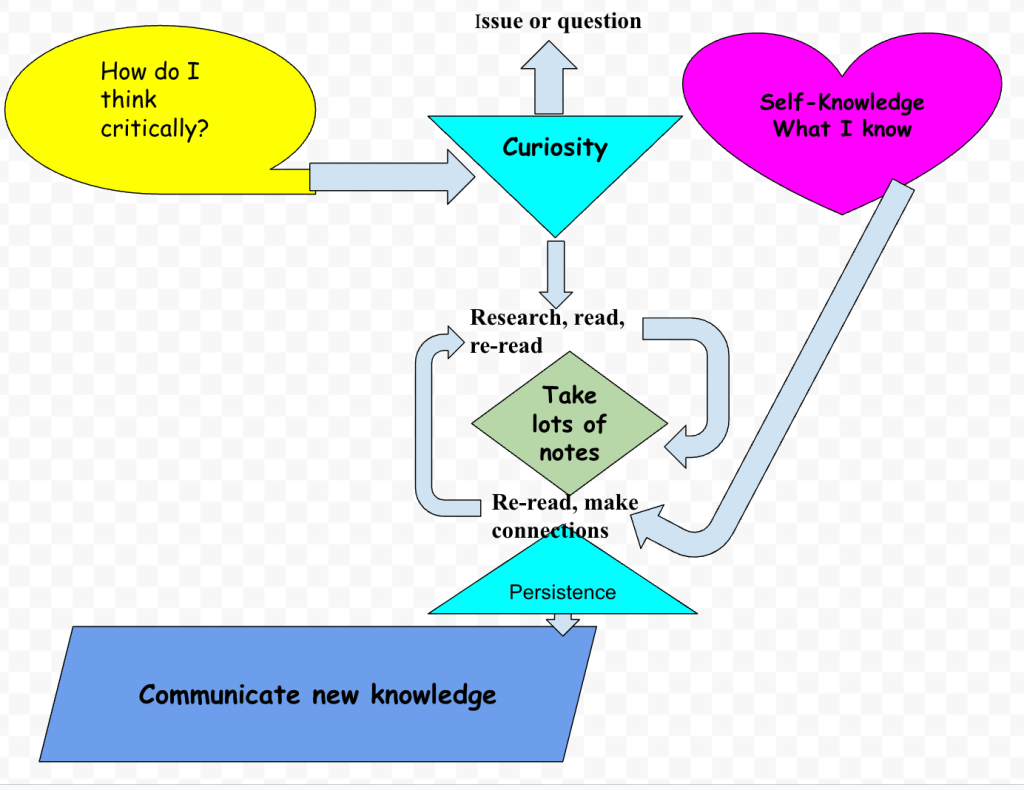
After this discussion, we were then asked to create a Critical Thinking Map with a partner. Rachel & I created this image that included a speech balloon as we talked about our critical thinking process. Then, while eating lunch, I created a Google drawing of my critical thinking process, which I may use in my teaching. See below images

After screaming at WordPress for 30 minutes on how to place my images side by side, I’m still not sure HOW I did it. Clicking, deleting, uploading, deleting again and again, I finally have them side by side. Was this a critical thinking moment? Maybe . . .

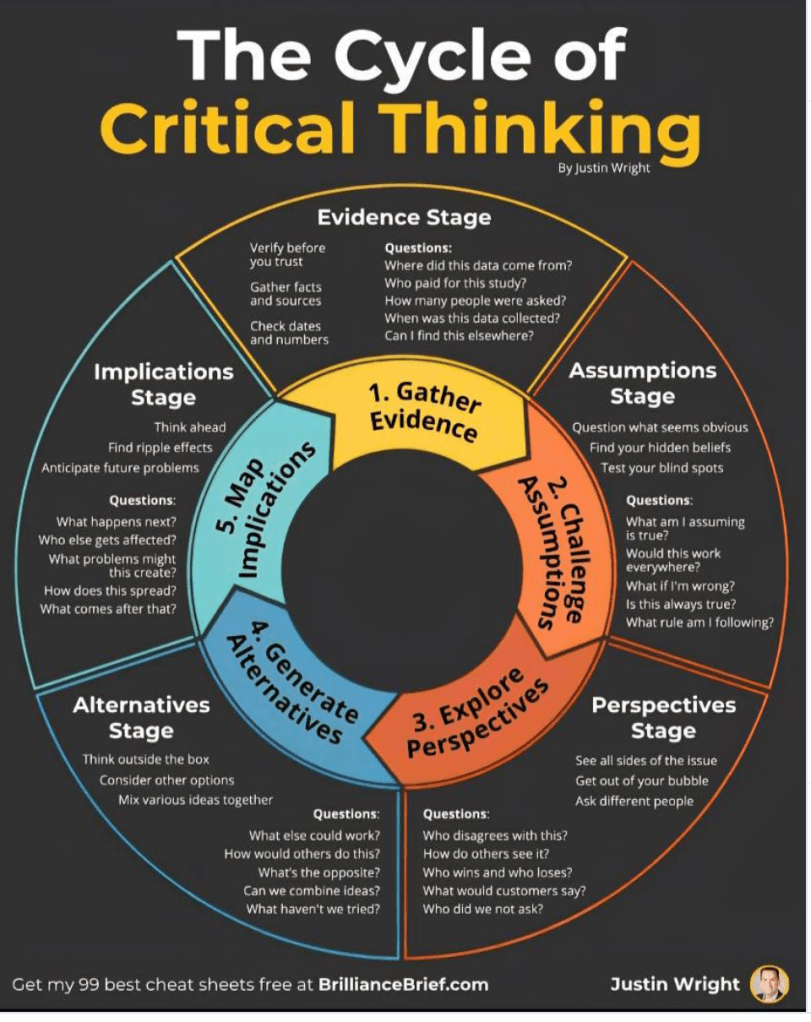
After writing my blog post yesterday, this popped up on Instagram, and I thought I would share it here. A more detailed process after you have a thing, an issue, or a problem you are curious about. Getting first-years to pick or choose that thing/issue/probelm they are curious about is the hardest part. That’s the initial critical thinking part I help them with, then we are off to the races, finding research, reading articles, and getting students to make connections between the articles and their own knowledge and/or biases. Getting them to persist is a struggle for some students, one of the habits of mind.

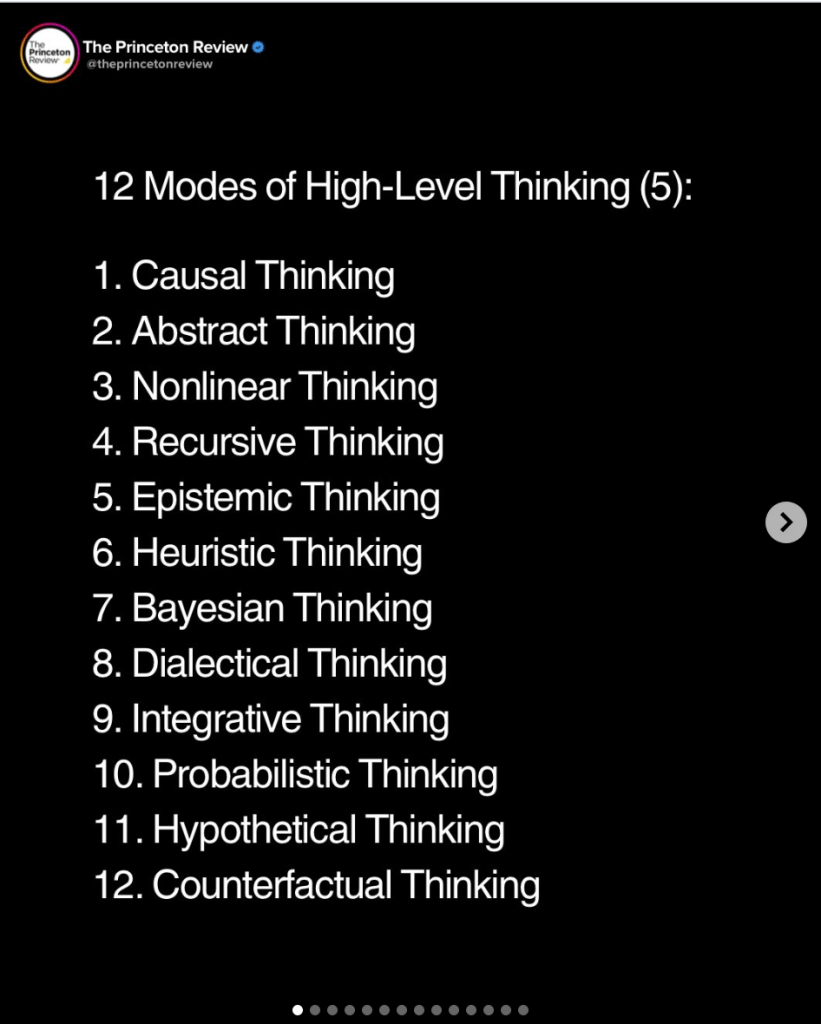
Again on Instagram, this popped up. This is a LOT of thinking and way beyond my students. But I thought it was fun to consider.

Yay, my fourth post is done for now!

Revised June 9! Writing is a process, as this post illustrates. And critical thinking can be taught in several ways, depending on the audience.

Posted in Uncategorized | Tagged , | Leave a comment

Spring Projects & Power Washing!

For the last month, I have been doing spring clean-up jobs. It started with raking all the leaves off all of the back flower gardens. Then I had to change the oil in both mowers before I could mow the yard. I have a 40+ year old Sears mower and a newer Toro self-propelled. I call the Sears mower CindyLou because my friend Cindy gave it to me when I first moved to my little house in 2018. CindyLou starts on the first pull every time. I got the Toro from my sister 5 or 6 years ago, and it is needier; it needs a clean air filter, premium gas, and this year, a new spark plug. Yes, my first time changing the spark plug, but I still couldn’t get El Toro to start, so I took it to Ace Hardware, and they gave it a tuneup. While El Toro was in for a tune-up, I mowed the front and back yards with CindyLou. I believe she mowed for the last time. She was just chugging along for the last part of the backyard, great for being over 40!

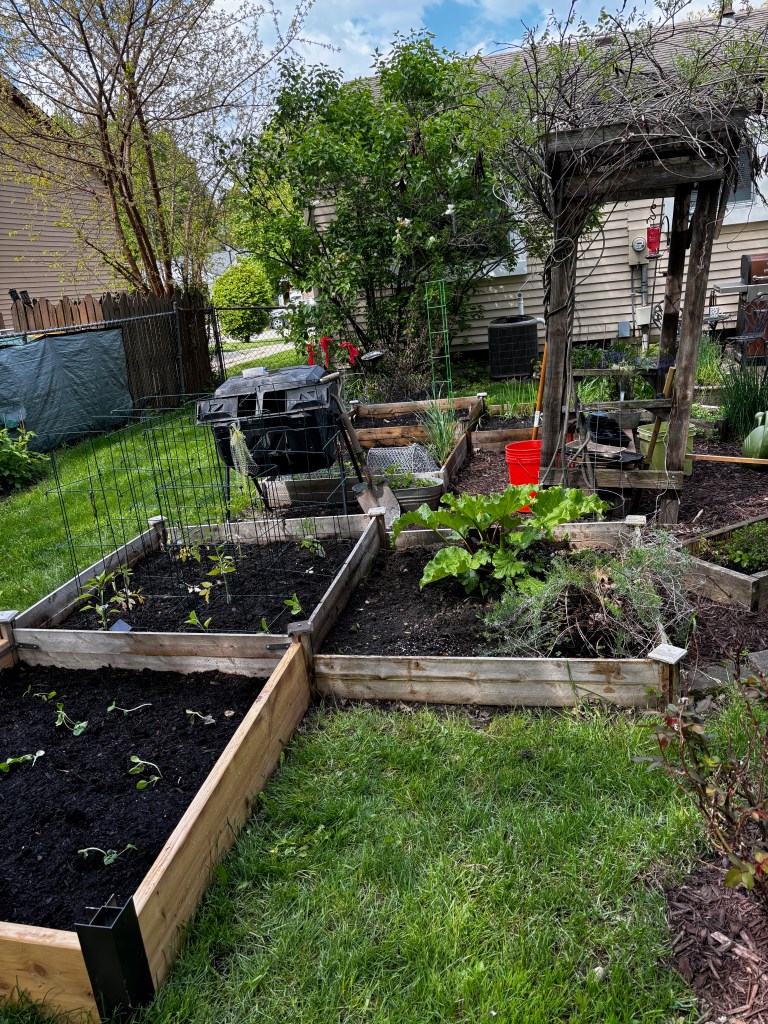
Next, I planted the vegetable garden. I now have six 4×4-foot raised beds. I planted the peas on April 26th, then a few days later I planted the green beans, beets, and carrots. The day before Mother’s Day, I planted the tomato plants, green and yellow peppers, zucchini, eggplants, and cucumber plants. I also have sunflowers and marigolds planted. Each year, I create a map of my garden items with dates planted so I know when the seeds should be popping up. I had to replant about a row of green beans, who knows why some seeds never sprout.

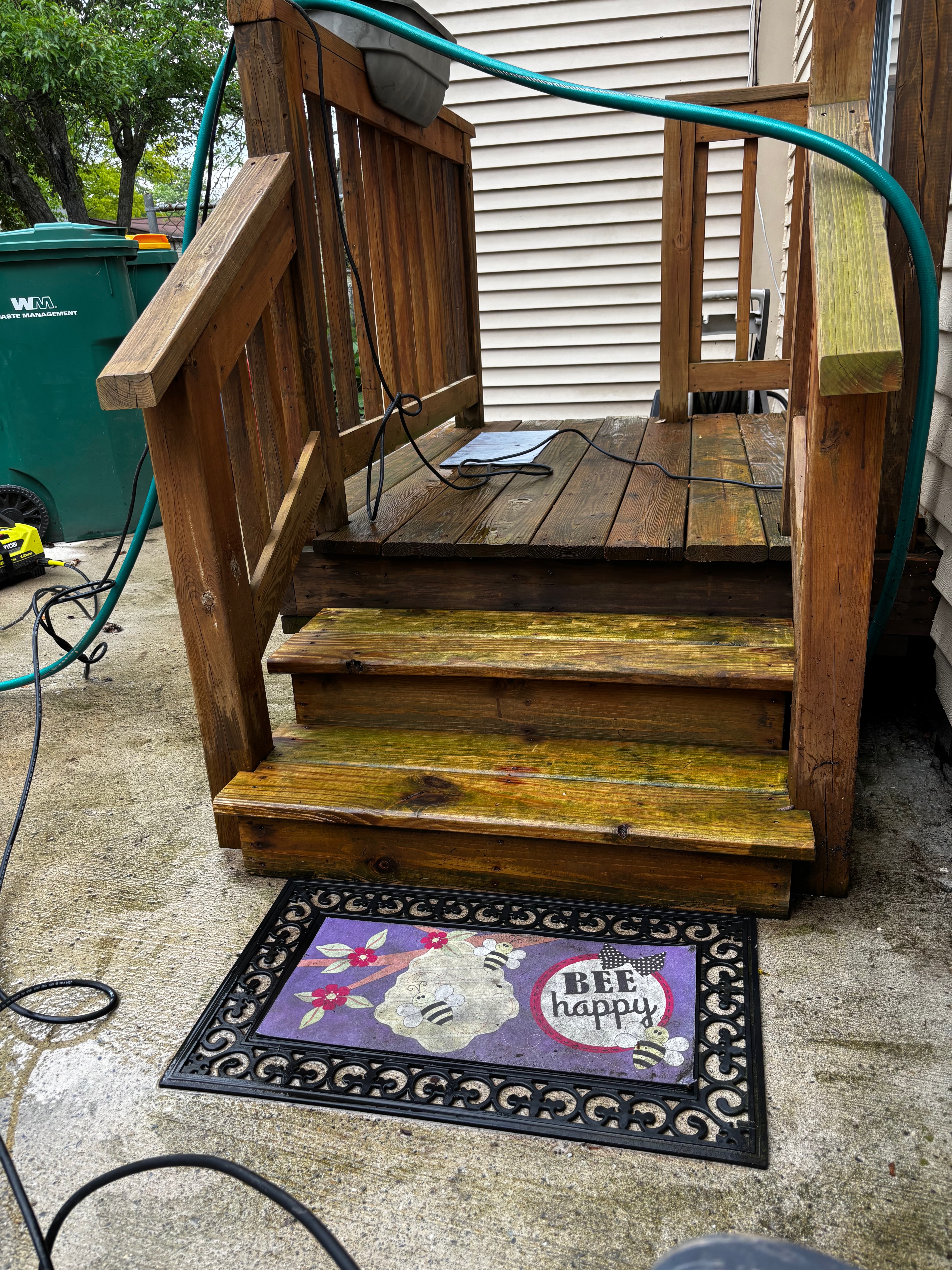
Then I began power washing, first the side porch, house siding, and driveway on the north side of the house. So, on our first 80-degree day, I started. It needs to be warm because you get wet; there is no way around it.

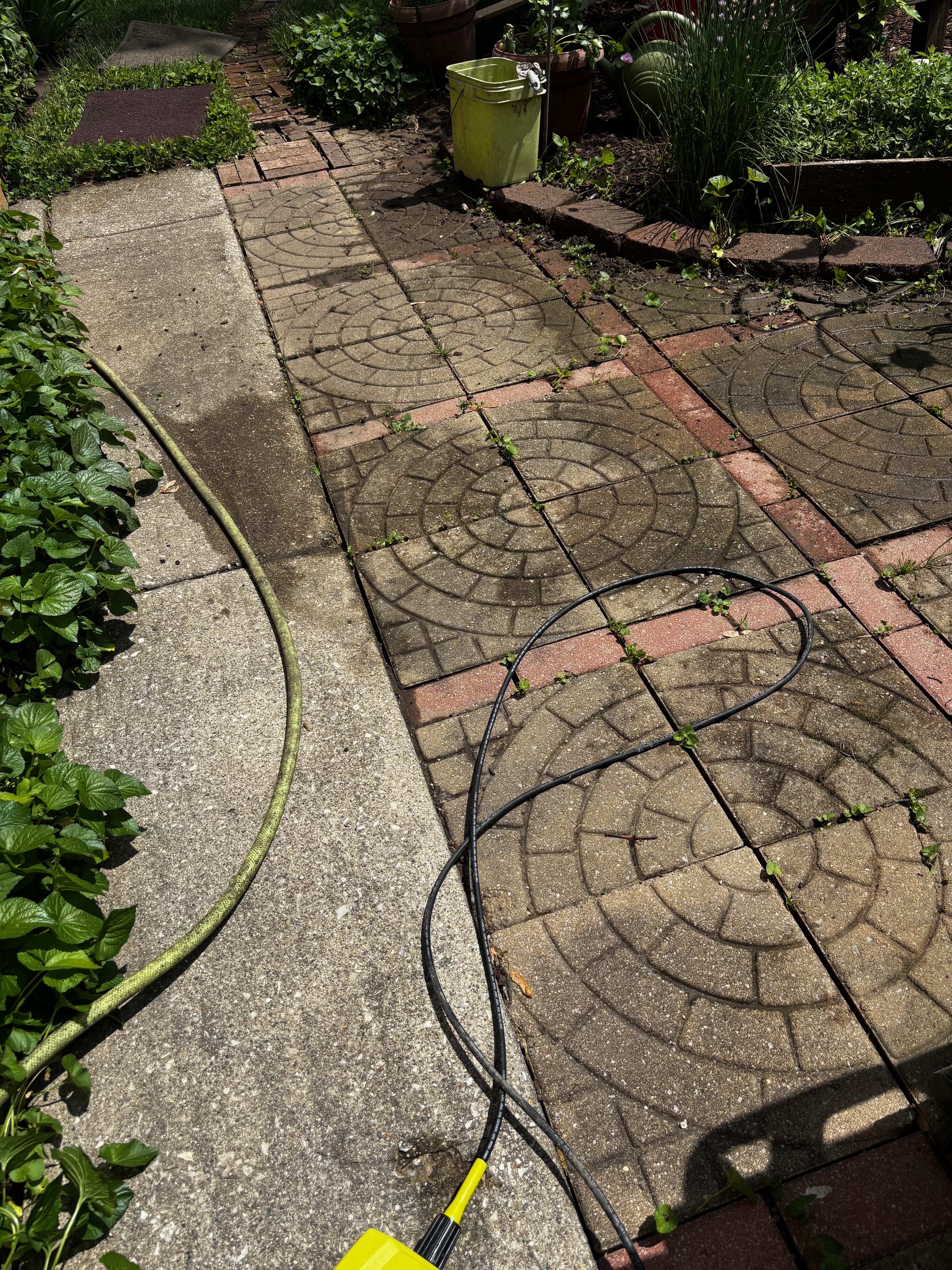
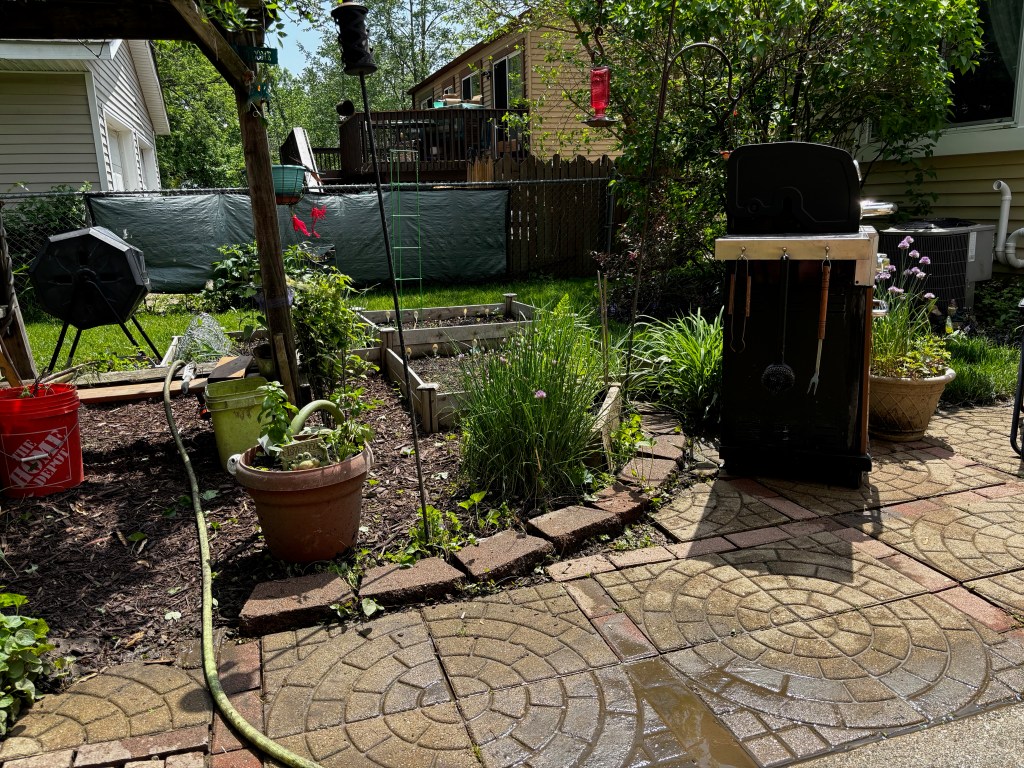
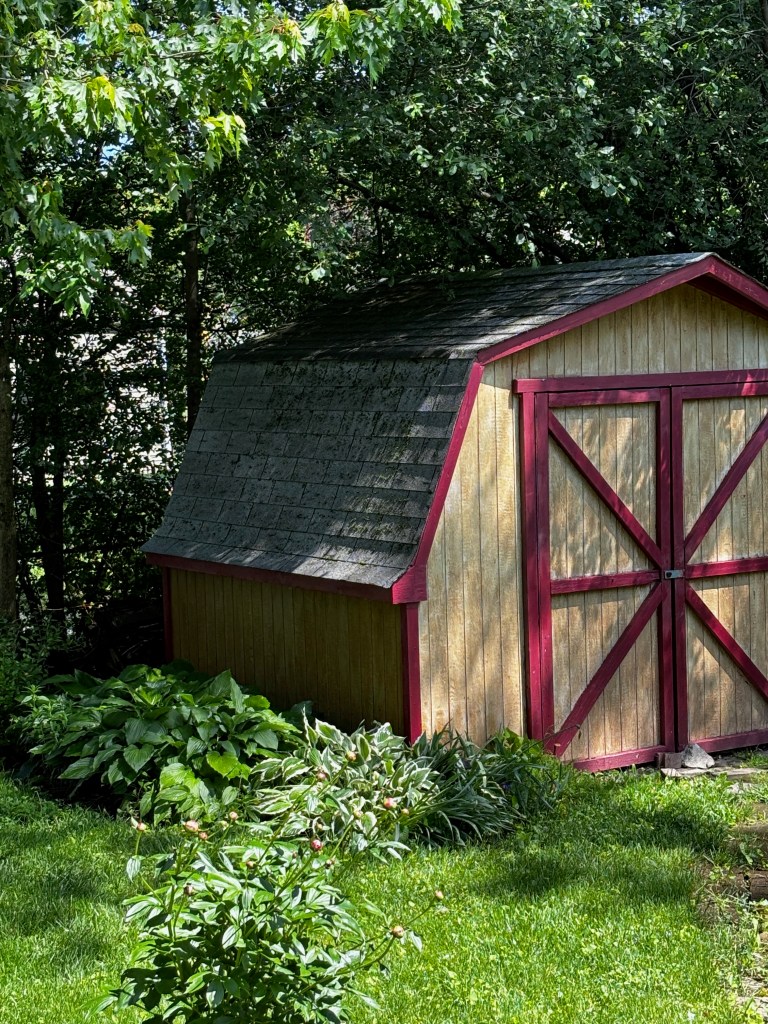
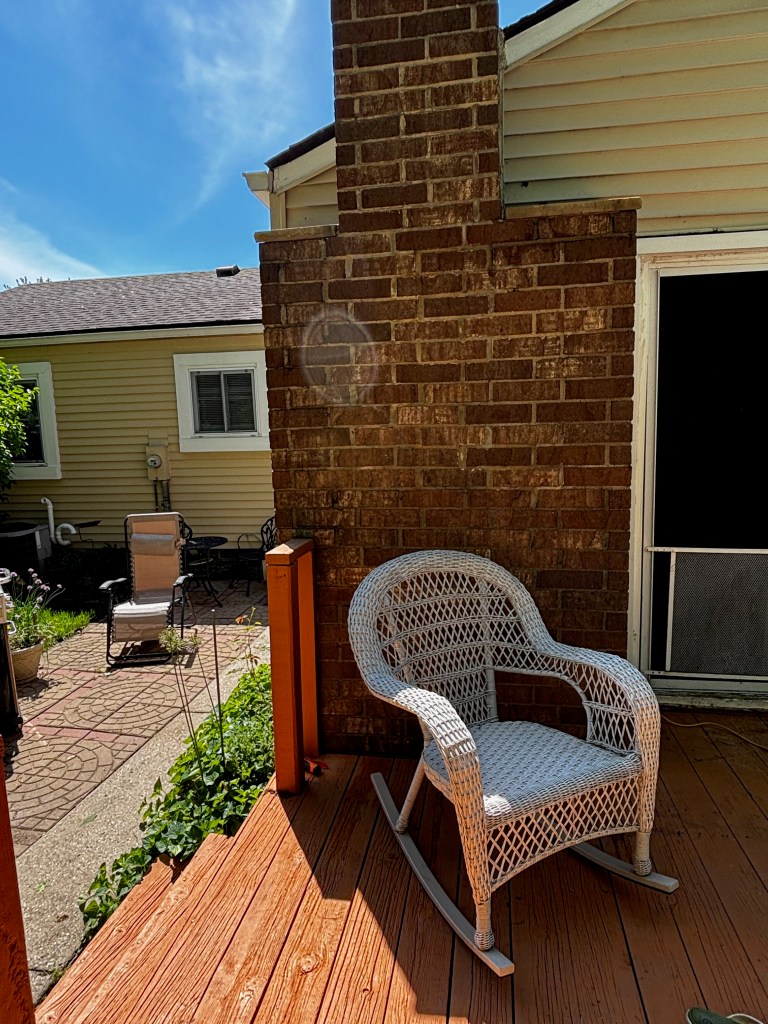
Next, I power washed the back patio, sidewalk, and garden stones. My neighbor’s correct when he says it’s addictive! When I did the first garden stones, I was shocked at how much lighter they were. The third time I powerwashed the fireplace chimney bricks, white rocker, deck storage container, and the tiny barn roof on the north side because it had mold! It makes me tired just typing this, but it really does feel good to see the difference.

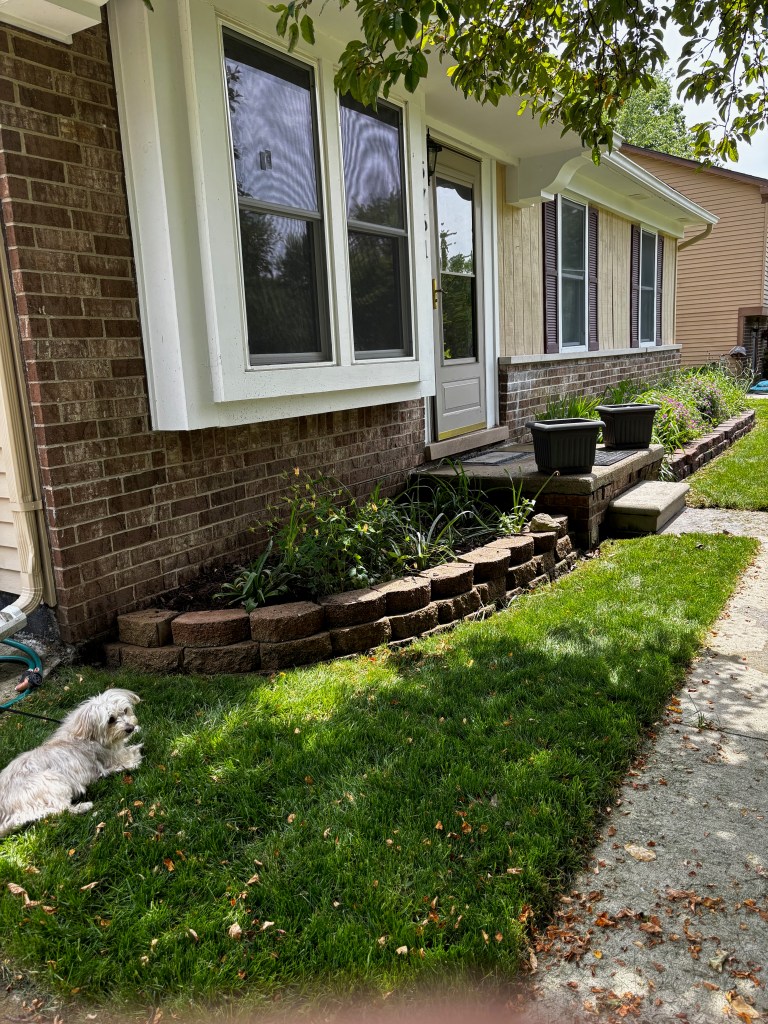
The last time I power washed the front garden stones. After a week and a half of power washing, I packed the power washer up and took it to the basement. I’m done for the season!
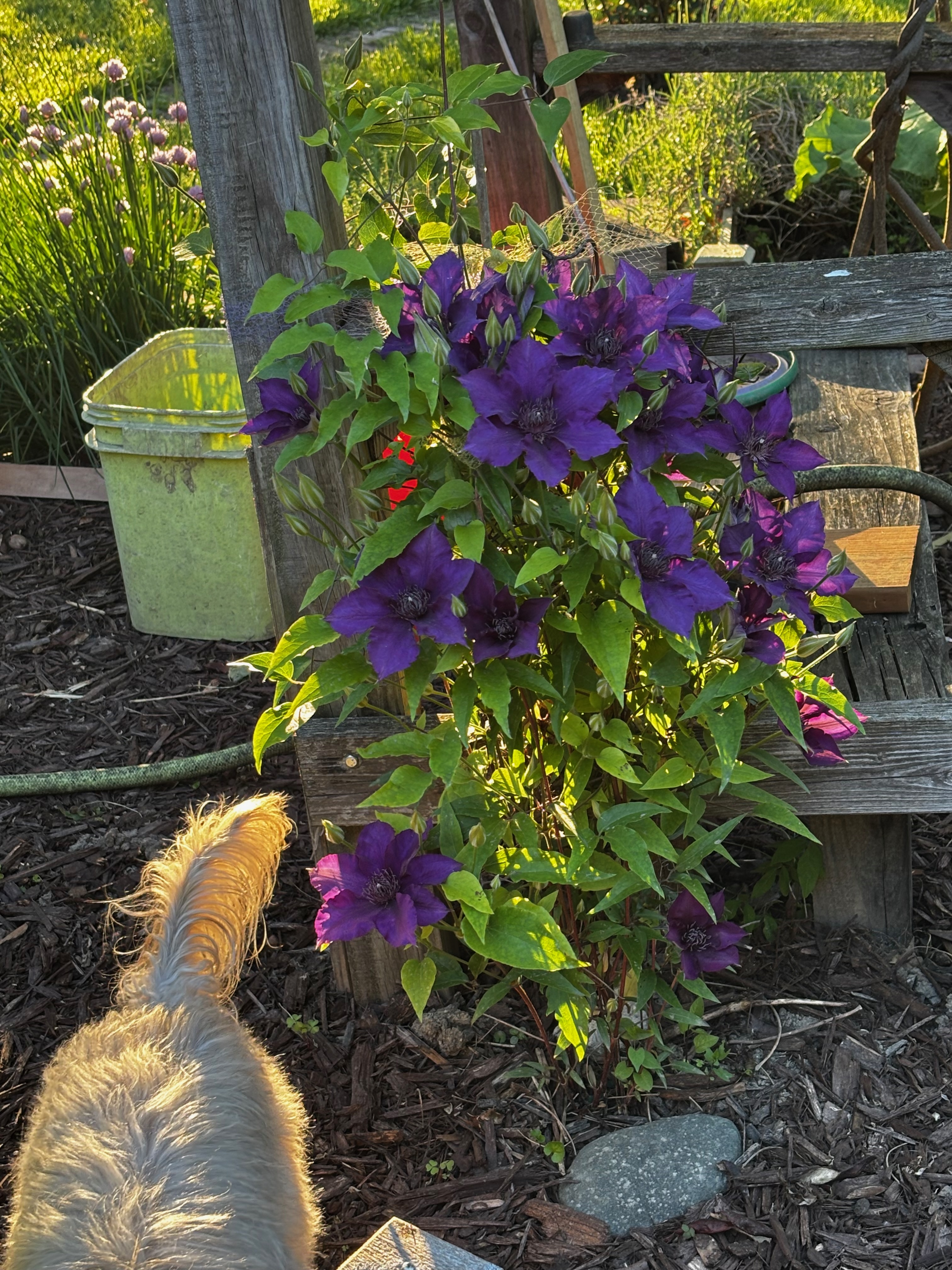
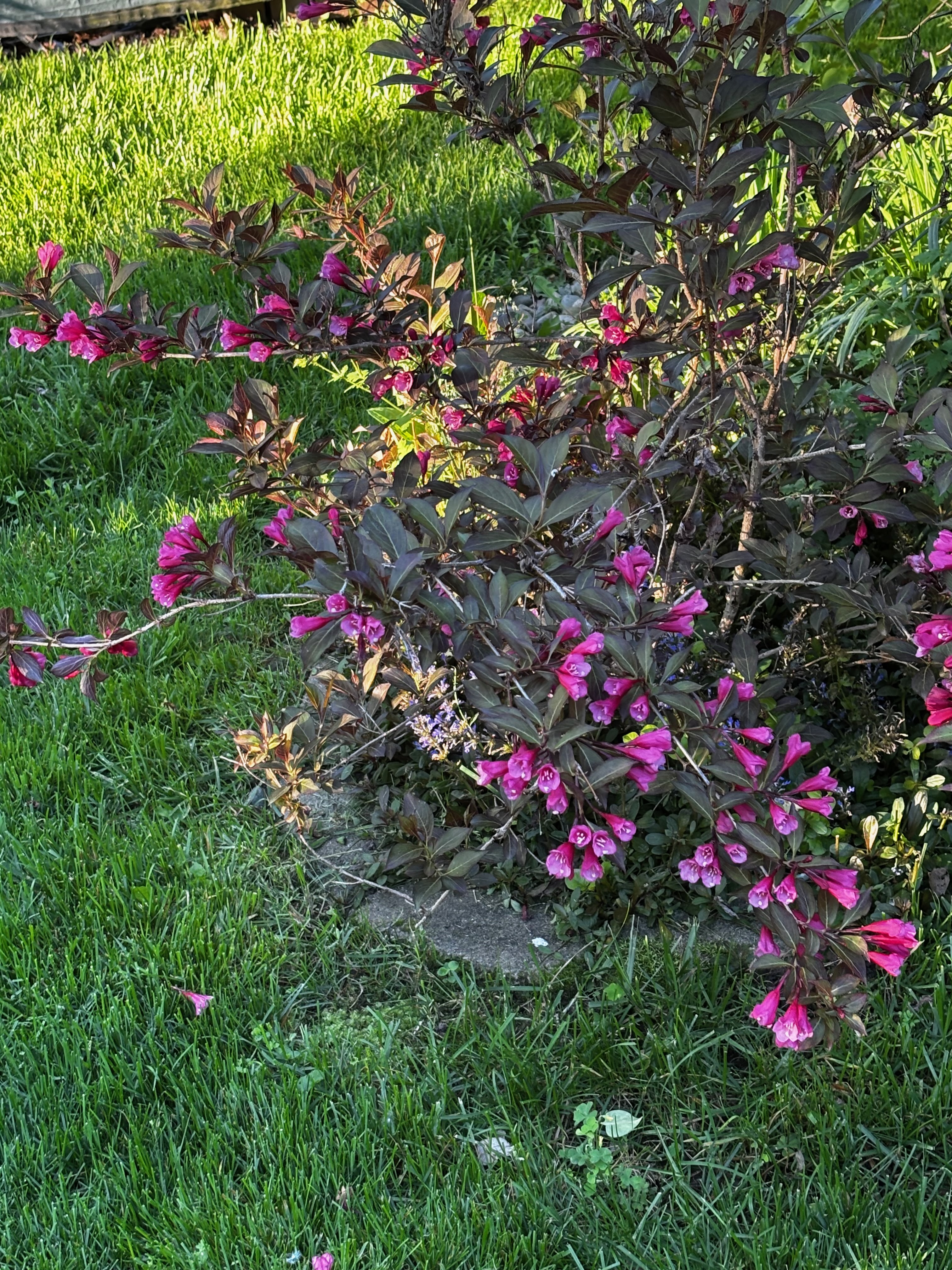
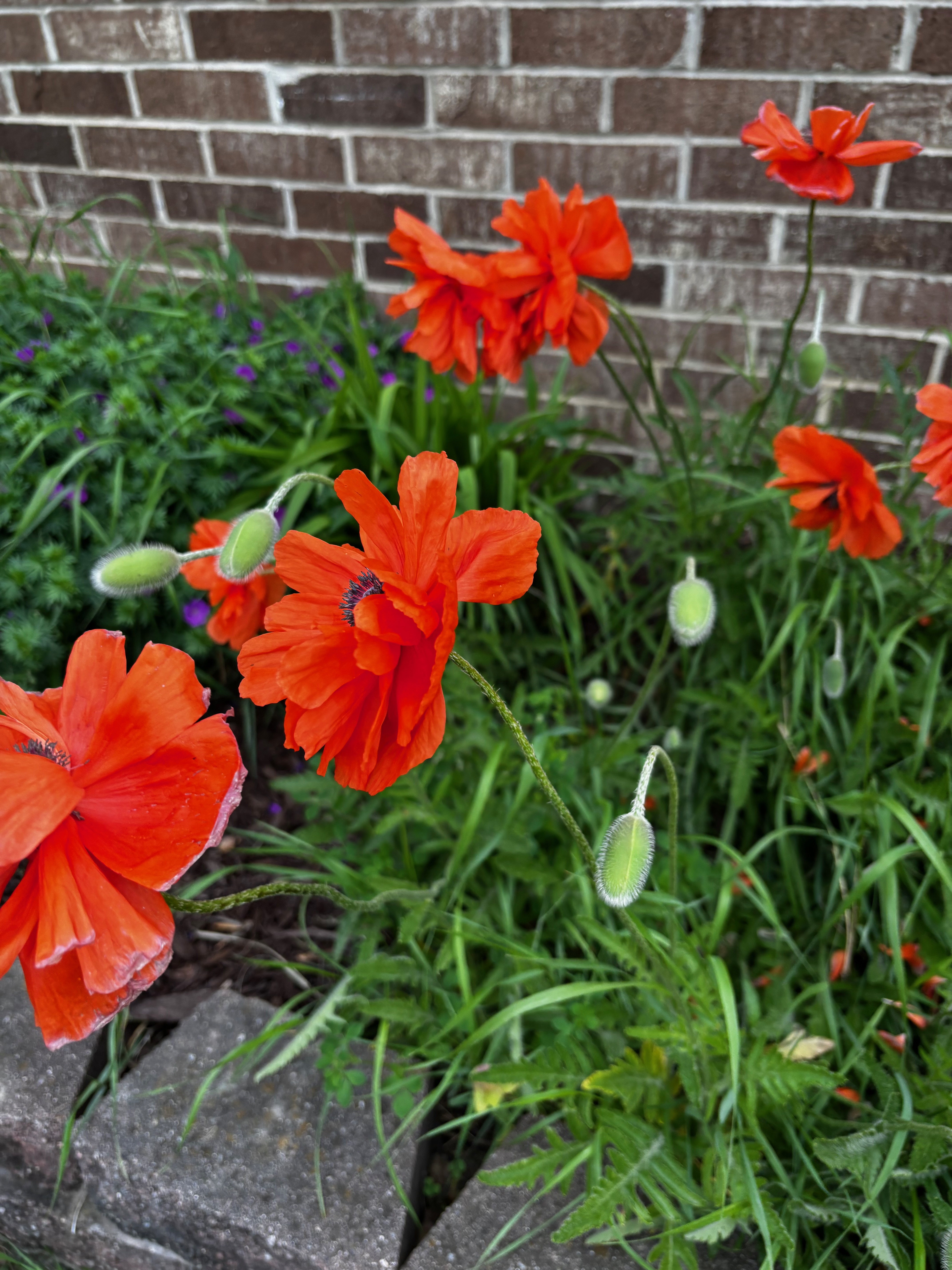
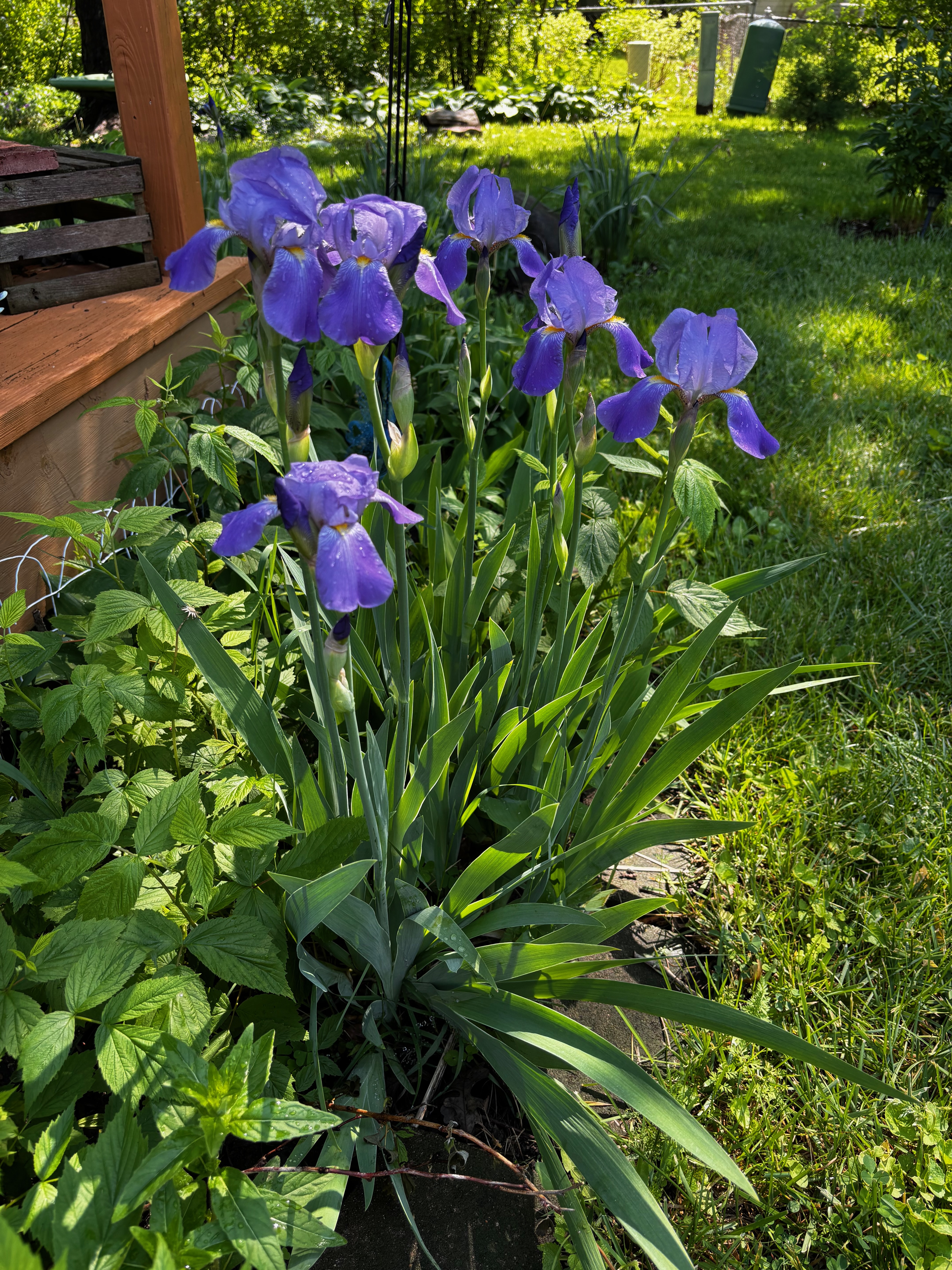
Now I can enjoy watching everything grow and eventually harvest. I love having flowers bloom. Right now, the clematis and weigilia are in bloom. The poppies and iris have come and gone. It really is a special kind of peace and gratification.


Until next week, hang in there!

Posted in Uncategorized | Tagged , , , | Leave a comment

What I’ve Read Recently

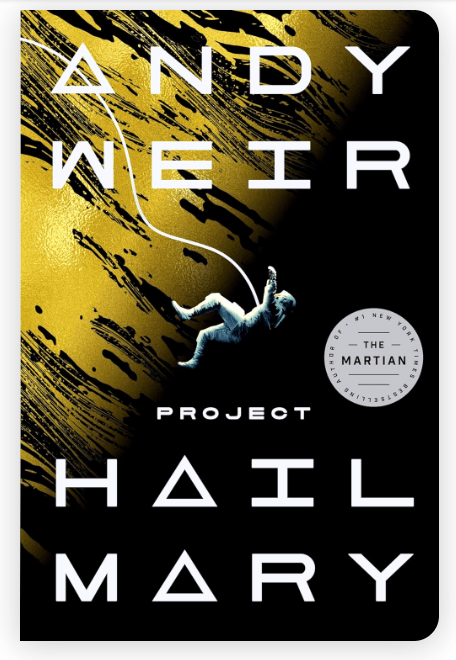
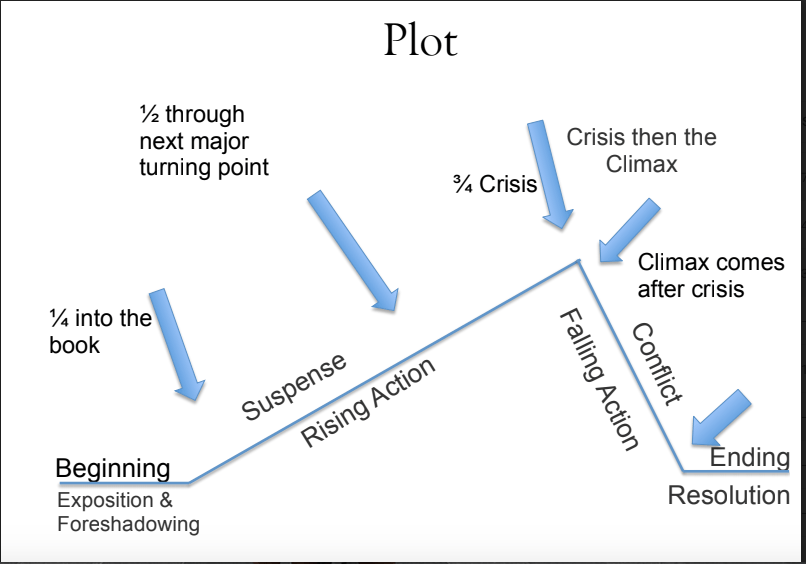
I’m always reading a couple of books at a time, usually a fun book and a learning-teaching book. I like to read before I fall asleep. I read a lot of murder mysteries. I have read all of Louise Penney’s Inspector Gamache books. The last year or so, I have been reading library or bookshop-themed mysteries. I teach first-year writing at EMU and WCC, so when I started reading Andy Weir’s Project Hail Mary, I realized it was following the literary narrative arc, and I was hooked in the first hundred pages. As you can see, in the image below, the beginning that leads into the rising action is what this book did so well. I was sucked into the book one night and read until 2 AM. I haven’t done that in a while. It could have been because it was a different genre than I had read in a while, or it was just because it was well written. Of course, I now wanted to go see the movie!

My sister and I saw the movie a week ago Thursday, and WOW. Weir’s descriptions are wonderful and easy to visualize; however, the movie visuals are spectacular. The movie makes everything bigger, even the spaceship, which in some scenes is reminiscent of the Starship Enterprise.

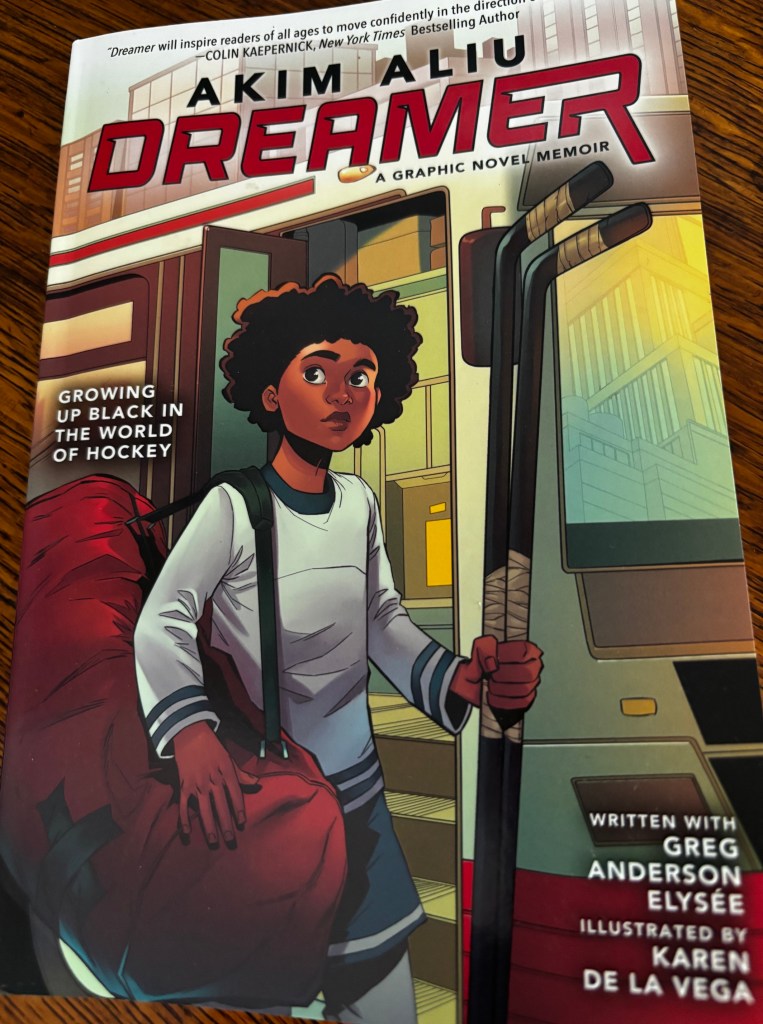
This past Tuesday, I sat and read the graphic memoir Dreamer by Akim Aliu straight through. I’ve had it on my to-read pile for a while. A very powerful story about the systemic racism that Aliu experienced in hockey. I use graphic memoirs in my first-year writing class. I have found getting students to pick a topic to research is difficult, so I have them choose a graphic memoir from my list at the beginning of the semester. They read it for the first project that ends with a proposal to research an issue from the memoir.

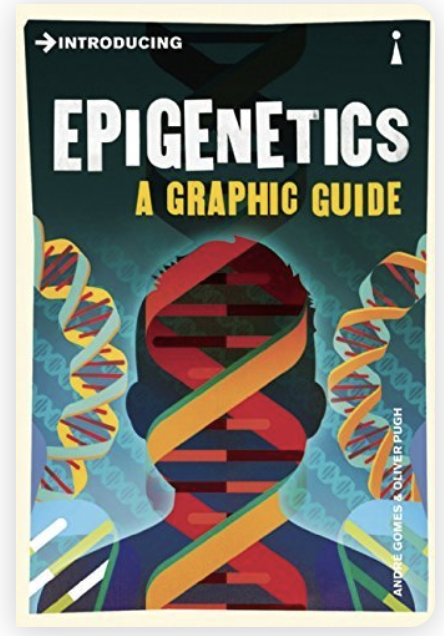
Another book I’m reading is Introducing Epigenetics: A Graphic Guide by Cath Ennis. My grandson is graduating from California Polytechnic State University this June, with a degree in cellular & molecular biology, so I wanted to understand what it was all about. This graphic guide explains just how complex our genetics, our DNA, which makes us who we are, really is, with wonderful comic illustrations with speech balloons.

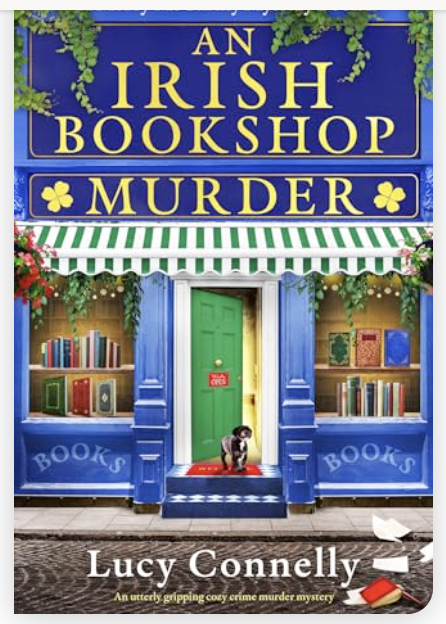
I also finished reading a fun book, The Irish Bookshop Murder by Lucy Connelly. This is a series, very fun, quick read. However, reading it after the Weir book, I found myself questioning a few sentences and wanting to revise them. Yes, I had to remind myself I was reading this book just for fun, stop editing! LOL!

I challenged myself to write in my blog at least once a week, and I’m finding it difficult, to say the least. This one has taken me a week and a half. Most of it is the frustration of not knowing how to insert and resize an image and getting it next to the text! I’ve been screaming at my laptop and clicking on every button, every icon, etc. Somehow, I actually got all of the book covers next to the text that talks about them. Yay! So, I hope I have encouraged you to maybe read Project Hail Mary or anything else that strikes your fancy.

Until next blog!

Posted in Uncategorized | Tagged , , , , | Leave a comment

Photo a Day in March for Cancer, and Now It’s May!

I took photos and posted them to Facebook almost every day during March. Another fundraiser for Cancer. Last year, Annie and I walked in March for Cancer. I used to use a camera but now I just use my iPhone. Photography has always been a special passion of mine. My Bachelor’s degree is in Fine Arts with double majors in Photography and Graphic Design.

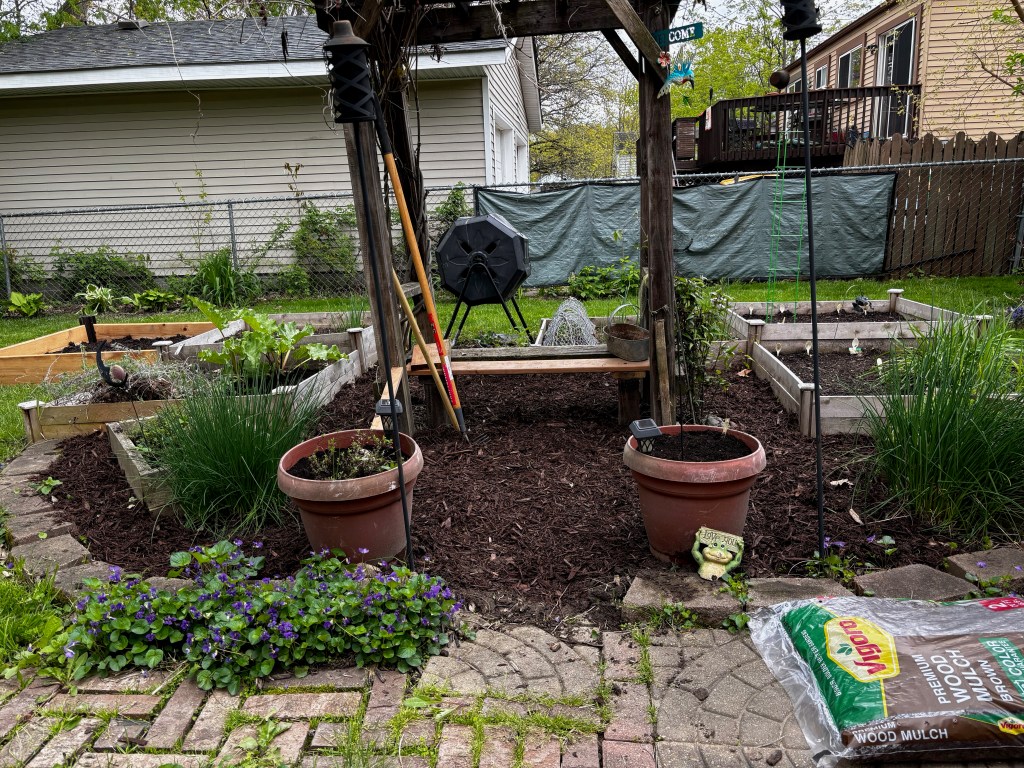
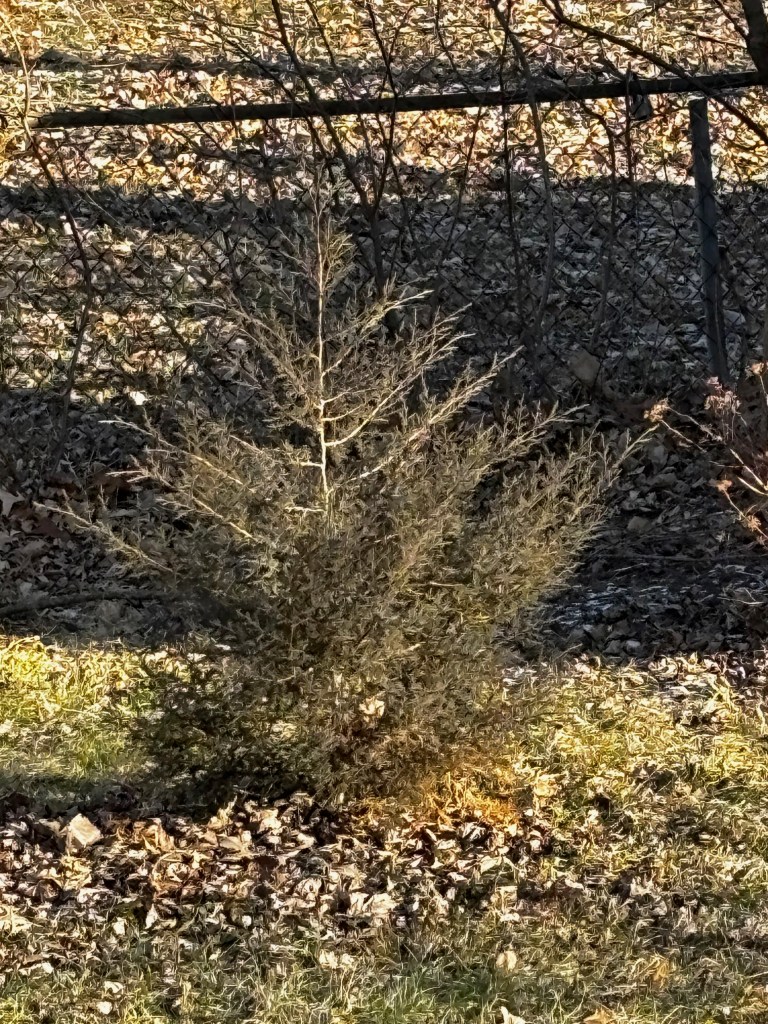
I wanted to write a blog post every week about the photos, but that didn’t happen. This post has been sitting on my site since March 1st. I had originally thought about a theme, “Trees,” for my photos, but that didn’t happen either. I wanted tǒ start with my little tree in the backyard that the birds planted for me six years ago. It was in my potager (photo below) next to one of the large planters at the entrance. I transplanted it two years ago to the left of the tiny barn and about ten feet from the fence. As it grows, it should obscure the ugly mental utility boxes next to the back fence.

March 1, 2026

Above is my little tree, a red cedar, according to a plant identification app.

It’s now May 5th, and I am trying to finish this post on this 55-degree, dreary spring day. The winter semester is over. Last night I had two students for WCC’s Virtual Writing Center. I finally figured out how to log in to the Zoom site without someone having to make me a host. The person who was supposed to work from 6-7 was not there last night. It felt good to help both students finish a paper they were working on. I really missed teaching this semester. It gives me purpose. I enjoy learning about each student through their writing, group talks, and conversations, even though it is sometimes very challenging. I am looking forward to next fall.

Between the gardening, mowing, and walking the dog I am going to try really hard to write another post next week. Wish me luck!

Posted in Uncategorized | Tagged , , , , | Leave a comment

Crot Essay Part 3 – 3-Panel Comic Activity

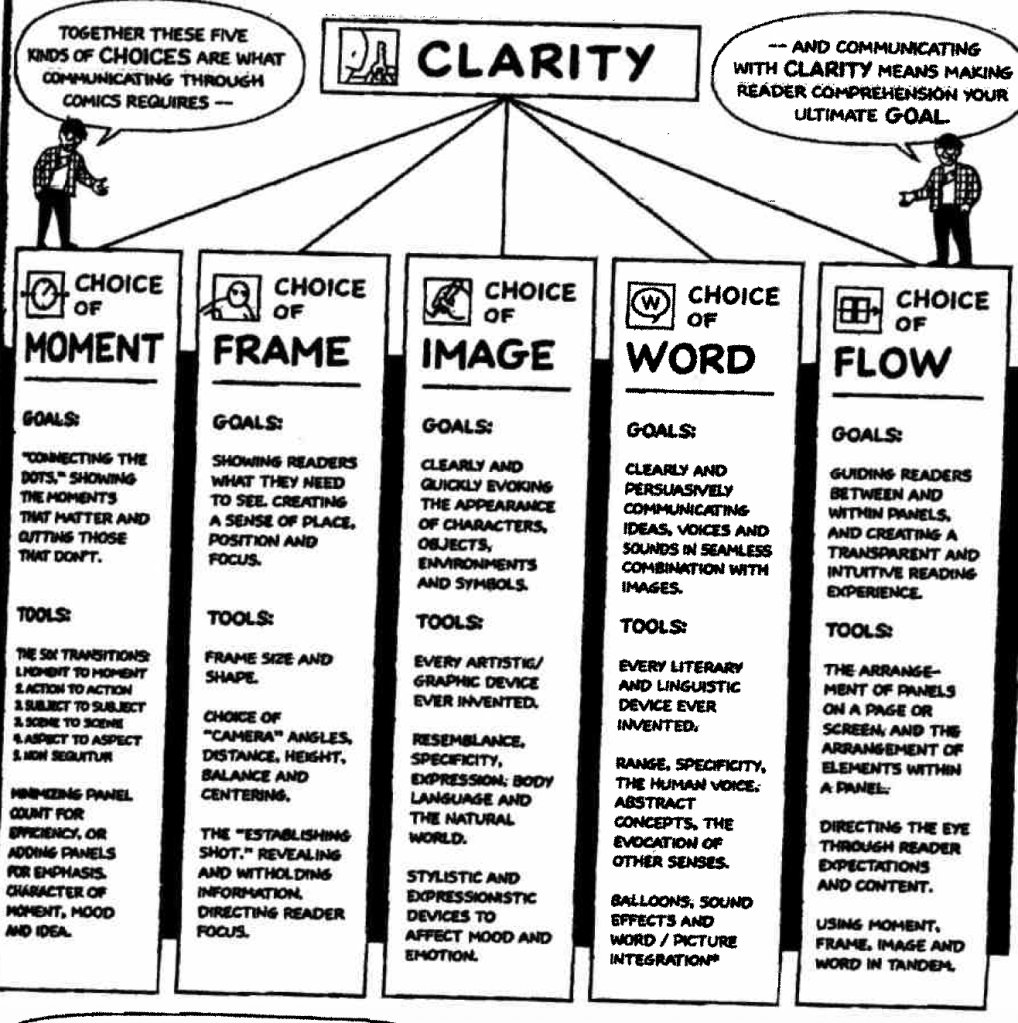
After the X-page activity, we discuss the first eleven pages of Scott McCloud’s chapter 1, “Writing With Pictures” from Making Comics. This chapter introduces students to McCloud’s five Choices of Clarity: choice of moment, choice of frame, choice of image, choice of word, and choice of flow (10). I place class copies of the Choices of Clarity and the Transitions on each table for students to reference as we discuss them (see below).

I love including comics in my writing class. First, it takes students out of their comfort zone, as Cathy Fletcher and Sarah Andrew-Vaughan advise in Writing Outside Your Comfort Zone. Second, it requires them to revisit a memory that creates a new “synaptic connection” in their brain, per Rick Huginer, a neuroscientist and husband of one of the authors of Your Brain On Art (11). So, I have students create a three-panel comic about their childhood learning moment from the x-page activity that has them revisiting a memory that helps them think about the details and pay closer attention to the most important parts of that childhood learning moment.

Because this is the same day as the X-page activity for their narratives, their choice of moment is already chosen, the childhood learning moment. We also discuss how these choices of clarity can relate to writing.

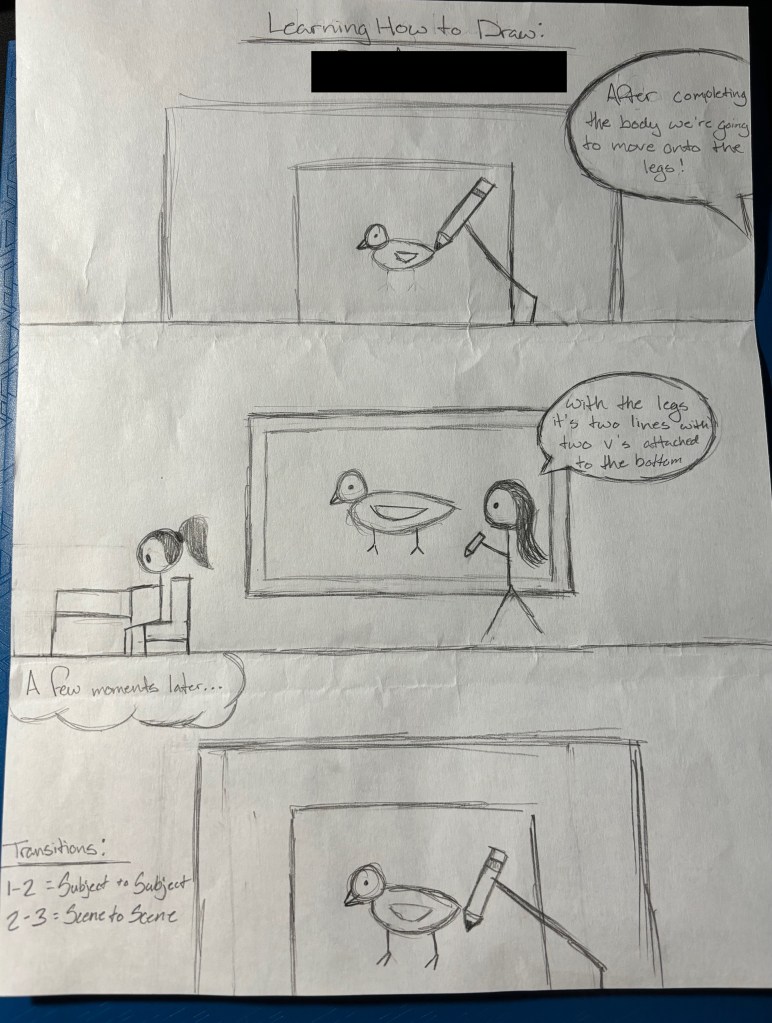
We then discuss the other four choices. As McCloud indicates choice of frame is like looking through a camera lens. Each panel can be close up or far away, or somewhere in between. For the choice of image, I emphasize that it is not about the drawing; I strongly encourage students to use stick figures and icons. For the choice of word, I remind them to make it as concise as possible. Last, the choice of flow for our three panels is left to right or top to bottom, depending on how they use the paper, either portrait or landscape. We then discuss how time passes between each panel using the six transitions; it will be moment-to-moment or scene-to-scene, which is a significant amount of time or space. I show them my example comic below, which illustrates a choice of moment, the first day of class. The transitions between each panel are both moment-to-moment and action-to-action. For the choice of word, I have used a thought bubble, a speech balloon, and a splash sound effect.  

3-panelComicGP.jpg

At this point, I explain that they are now going to create their own 3-panel comic, and I hand out plain paper to each student. I remind them that there are colored pencils in each group’s box that I placed on the tables at the beginning of class. I have students fold the sheet of paper in thirds to get them started. Then they write the title of the X-page Childhood Learning Moment at the top, along with their name. They have the last 15-20 minutes of class to draw.

Below is an example of a student’s first paragraph of their x-page narrative, and next to it is their 3-panel comic about that moment. At the bottom of the comic, I have then tell me what transitions they have used. This one says, subject-to-subject and scene-to-scene. I commented that it is actually moment-to-moment because scene-to-scene is a significant amount of time.

“On a sunny spring afternoon, I was sitting in my fifth grade classroom with my teacher pulling up a video on how to draw a bird. The lights were off and the bright but subtly light from the sun was coming through the window. All of us were silent as we excitingly awaited to start drawing with the paper in front of us and pencils in hand. ”


Most students will finish the comic by the time class ends; however, I give them extra time. Students take a photo of their finished comic and upload it to their Google Drive folder shared with me. When I’m assessing their “Who Am I” crot essays, I also read their comics and insert a comment. This first writing assignment is always fun to assess, and I learn a lot about my students.

Posted in Uncategorized | Tagged , , , | Leave a comment

Crot Essay Part 2

For homework for the second day, students need to finish their Childhood Learning Moments Timeline. I start my class slides with a Winston Weathers’ 1984 definition: “The crot is an obsolete word meaning a “bit’ or ‘fragment, ‘ the crot may range from one sentence to twenty or thirty . . .It is fundamentally an autonomous unit, characterized by the absence of any transitional devices” (136). Then we discuss Melinda Putz’s short article “The Crot.” Putz definition: “A crot could be a single sentence, a quotation, a proverb, a list…, a description of a scene, a dialogue, a poem.” Then we discuss Sherman Alexie’s “Unauthorized Biography of Me,” which is a crot essay. Students are put in groups of 3-4, and each group is assigned a specific page of the article. Students are given about 10-15 minutes to count the crots and decide what genre or type of writing each crot is on their assigned page. I answer questions about what I mean by genre or types of writing and remind them there is a double-space between each crot as they work together. I love seeing the lightbulbs come on. Then each group shares its findings with the class.

For instance, on the first page of the Alexie piece, there is a short bio about the author, which I bring to students’ attention. Then the first crot is a scene about Indian boys playing basketball until it’s too dark. The next crot is a thesis statement about Alexie stating he has “never met a Native American” but has “met thousands of Indians” (46). The next crot is some dialogue between Alexie and a person in the audience on why he refers to himself as an Indian. The last crot of this page is the beginning of a seven-paragraph narrative with some dialogue. The first group would tell the class there are five crots in five different genres on the first page. Each group presents their count of crots and genres to the class. By the time we go through all seven pages, the students get the idea about what a crot is, a specific type of writing such as an anecdote, scene, thesis, lists, formula, narrative, dialogue, description, lists, and even a bio of the author. They can also see that all of the crots are separated by a double white space, with no transitions. I bring to their attention that the thread or connection that holds them all together is that the crots are about Sherman Alexie. This is reflected in the title “Unauthorized Biography of Me,” just as the title of the assignment is “Who Am I?” As a first assignment, this crot essay gives me information and insight about my students.

At the end of the second class, I have students make a copy of the auto-bio poem form (see below) in our shared folder and navigate it to their Project 1 folder shared with me in Google Drive. This could also be a hard copy for students to fill out. Students have to fill in the blanks in the form with words that describe themselves. Then they use the phrases and answers to create their auto-bio poem (student example below). This poem counts as one of their 10 childhood learning moments for a first draft due for the next class.

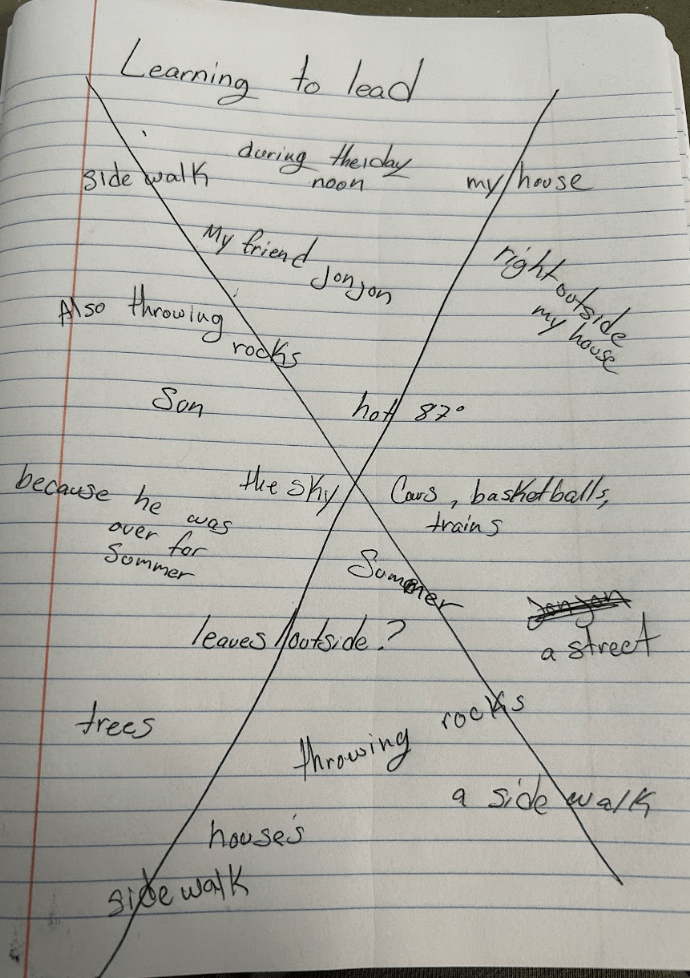
At the beginning of the third class, to help students with their 4-6 paragraph narratives, I have them do Lynda Barry’s X-page activity from Syllabus (79-81). Students open their composition books or notebooks to a blank page and draw a big X across the page. I have them put the title of the childhood learning moment at the top of the page. Then, as I read the 20 questions out loud, students write their answers anywhere on the X-page. Questions such as: Where are you? What are you doing? What season is it? Where is the light coming from? Who else is there? Etc. (student example right)

After students have answered all of the questions, I tell them to revise this learning moment using their answers to expand the narrative into 4-6 paragraphs with some dialogue. When I assess the crot essay assignment, it is easy to see if they have revised by adding their X-page answers, telling me where they are, the season it is, where the light is coming from, who is with them, etc. Here’s a Crot essay Student Example with my comments.

Also on the third day, students create a 3-panel comic about the X-page Narrative. The reading assignment for this class is the first 11 pages of Scott McCloud’s chapter one, “Writing With Pictures,” from Making Comics. In my next post, I will explain this activity and include examples.

Posted in Uncategorized | Tagged , , | Leave a comment

Teaching All Learning Types Through The Crot Essay Assignment

I gave a presentation at the Southern Regional Composition Conference in May titled “20th Century Crot Esayy Meets 21st Century Multimodality.” I wanted to write an article about this assignment, so I’m making myself write this post as the first part of a possible article.

One of my goals in teaching first-year writers starts before the semester begins with emailing students my list of 26 titles of graphic memoirs for a semester-long project. Then, for the first introductory discussion or class fast write, students take the VARK questionnaire developed in 1992 by Neil Fleming and C. Mills. Telling me what type of learner they are, if they have read a graphic memoir or novel, and what field of study they are pursuing. If you don’t know your learning style, click on the link above. Try it, then leave me a comment if you learned something new about yourself.

When I was in high school, English was not my best subject, and I can still hear my teacher telling me, “You are a creative writer; however, you need to learn the fundamentals.” I know the fundamentals are the ‘later-order concerns’ or the last part of the writing process for any piece of writing. I also learned there are multimodal literacies, not one literacy. My teaching philosophy reflects this, as I learned from Jewett & Kress when I was writing my grad project.

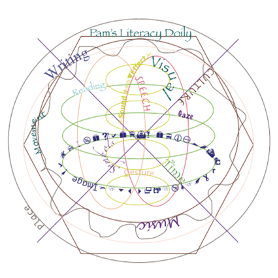
“ . . .These literacies are like an old-fashioned lace doily with threads of image, gaze, gesture, movement, speech, music, and sound effects woven in language, culture, time, and place to communicate meaning. This literacy doily will be different for every human being and will reflect each person’s learning style— visual, aural, read/write, kinesthetic, or multimodal— developing over a lifetime”(McCombs).

I’m a multimodal learner, leaning more toward the visual, as you can see in my literacy doily above, the word visual is the same size as the word writing. Per my syllabus, my students write all of their assignments in Google Drive documents, allowing them to incorporate images and hyperlinks, and share with me and fellow students for peer review comments, a digital multimodal writing experience.

On the first day, I take students out of their comfort zone by introducing them to Scott McCloud’s “Chapter 2: The Language of Comics,” from Understanding Comics, which is about “icons.” I then have students draw their iconic self, which will be incorporated into their first written assignment, the crot essay “Who Am I?” I use comics in my writing class to help level the playing field between those high-achieving read/write learners and the aural, visual, kinesthetic, or multimodal learners.

Here are a few student examples. One of my favorites is the last one above; she did not like drawing; however, she portrays her iconic self well with that one simple line for her frown. Their iconic self drawings are then incorporated into the crot essay, helping tell me a little bit about each student.

The crot essay “Who Am I?” assignment asks students to write about 10 childhood learning moments in at least 5 different genres or types of writing. To help students get started figuring out their learning moments, I have them create a childhood learning moments timeline with dates and icons, moments that shaped who they are today. I have them start with their birthday in the lower right corner and curve their way up to the top, present day. I share my example, and they begin creating theirs during class.

To help students learn what a crot essay is, for day two, I have them read Melinda Putz short article “The Crot.” Putz’s definition: “A crot could be a single sentence, a quotation, a proverb, a list…, a description of a scene, a dialogue, a poem.” They also read Sherman Alexie’s “Unauthorized Biography of Me,” which is an example of a crot essay that starts with his short bio, then a scene of Indian boys playing basketball until it is too dark, then a thesis statement, and so on. We will discuss both articles and do a group activity during the next class.

So, on the first day of class, they were introduced to Scott McCloud and drew their iconic self. They also started a childhood learning moments timeline, and they got to know some of their fellow classmate. Stay tuned for part two.

Posted in Uncategorized | Tagged , , , | Leave a comment

It’s Nice To Have Company!

I finished everything on my to-do list. It amazes me how motivated I get when company are coming to visit. I powerwashed, painted, cleaned, sewed, gardened, and mowed weeks before the visit. Then last Friday, my oldest son, Mike, and his little French Bulldog, Bo, came to visit. They arrived around dinner time. My sister came over and joined us for pulled pork sandwiches with coleslaw. Then later, he and I sat on the deck, listening to music, enjoying the cool evening breeze.

Bo and Annie had a great time together, playing tug-a-war, running around the yard, and cooling off. It was in the 90s for the entire visit, and little Bo quickly learned where the air conditioning vents were.

I had an outdoor game day planned with family and friends on Sunday, unfortunately is was 95 degrees and humid so we played one game of horseshoes and one game of cornhole and the ladies played badmitton for about ten minutes. Annie’s little pool was a hit with the ladies cooling our feet! Most of us did eat outside in the shade of my oak and silver maple trees the variety of dogs and sausages Mike grilled.

But the best fun happened in the air-conditioned house when I handed out bottles of bubbles!

The little kid inside everyone came out, and the laughing began!

Monday, Mike and I had planned to attend the Detroit Ford Fireworks. Through my research, I discovered I could pay for reserved parking. I reserved a spot that was a three-minute walk to Hart Plaza. Even though it was in the mid-nineties, there was a cooling breeze off the river. We got there around 6 pm, and the fireworks don’t start until 10. The people around us were friendly, and several had been there many times.

Time passed, the sun went down, . . . and then the fireworks began!

The lady sitting in front of us, wearing the red, white & blue hat, made for a perfect photo! With fireworks going off from three barges, it was the BEST fireworks I have experienced.

Then it was time for our company to head home. Little Bo, in the Hummer, is waiting for Mike. We all had a great time together.

Posted in Uncategorized | Tagged , , , | Leave a comment

Everything Costs $$, Even My Blog!

I used to write in my WordPress blog monthly sometimes weekly, but then I got busy teaching and just didn’t. I’ve longed to get back to blogging, so this morning I spent over an hour figuring out how to post in my WordPress.com blog. I finally ended up paying for the cheapest plan for a year, so I could add a new post!

The above images are my Summer reading for teaching First-Year Writing. I read Teaching With Ai for the Advanced WAC workshop in May. My plan is to incorporate AI as an editing tool for my students. I read Unflattening in 2016 and just read an interview with the author, Nick Sousanis, yesterday. I’m now reading Naming What We Know: Threshold Concepts of Writing Studies Classroom Edition by Linda Addler-Kasner and Elizabeth Wardle. I read the first edition a couple years ago. I’m on Concept 1.0 Writing is a Social and Rhetorical Activity. Absolutely, as I write this newest post that will be shared with my social media accounts, writing is a social activity.

The second image is of the graphic memoirs I’ve read this summer that I may add to my student’s reading list. Yes, I use comics in my writing course, which relates to Nick Sousanis, a comics artist, who wrote his dissertation in comics form as the Unflattening. This morning I reread sections that I had sticky notes on. Sousanis references Plato’s dislike of images and explains “in relying on text as the primary means of formulating understanding . . .the visual provides expression where words fail . . .and what can be made visible when we work in a form that is not only about, but is also the thing itself”” (59). He explains the different names this medium has been called “comic books, graphic novels, sequential art, manga” etc. but prefers “comics.” He goes on to reference Scott McCloud’s sequential aspect of “juxtaposed pictorial and other images in deliberate sequence” and states “. . .the reader animates and transforms the static into the kinetic. . .and brings it to life,” as shown in the image below (61).

This is one of the reasons I love introducing my students to the “magic” of comics. I haven’t referenced Sousanis in several years because our textbook was a graphic text, Understanding Rhetoric an allusion to McCloud’s Understanding Comics. But a year ago, our First-Year Writing Program changed our course text to a less expansive digital eBook Let’s Talk: A Pocket Rhetoric that is not graphic. So I need a few more sources to help students understand why I incorporate comics into a writing course.

This morning, after reading the threshold concept, writing is a social and rhetorical activity and perusing Sousanis again, I was inspired, I really wanted to write a blog post. I had several ideas of what I wanted to talk about and explain because writing helps me formulate how I will present my ideas to my students. However, since this has taken all day to write I lost some of my ideas. Now that I can write in this blog again I will be posting more often this summer.

Posted in Uncategorized | Tagged , , , , | Leave a comment